


The most memorable entrances are not defined by size alone. They are defined by material.
A custom entrance door can introduce warmth, depth, texture, reflection or quiet architectural presence before anyone steps inside. Stone can make an entrance feel monolithic. Wood can create warmth and familiarity. Metal can add precision and character. Leather can introduce an unexpected tactile detail. Lighting can reveal all of them—or diminish them.
Choosing luxury door materials is not simply a matter of selecting a finish from a catalogue. It is about creating a relationship between the entrance, the façade, the interior and the way the building is experienced throughout the day.
This guide explores how to select materials and finishes for a custom luxury entrance.
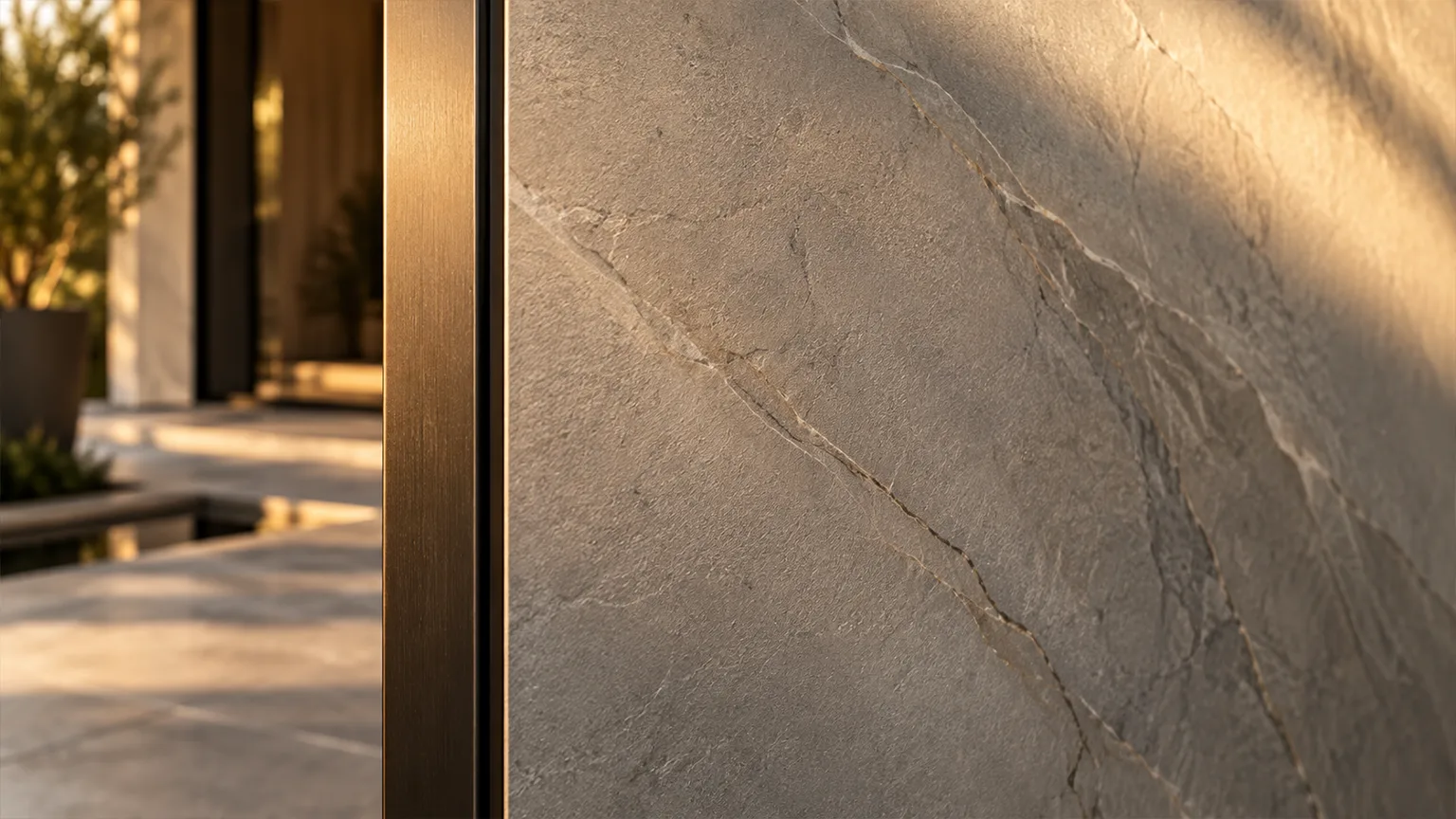
Start With the Architecture, Not the Sample Board
A material can look impressive on its own and still feel wrong on the finished façade.
Before selecting a finish, consider the full architectural context:
- Is the home contemporary, transitional, classical or highly sculptural?
- Is the entrance designed to disappear into the façade or become its focal point?
- What materials already define the exterior?
- How much natural light reaches the entrance?
- Will the door be seen primarily from close range, from the street or across a large landscape?
- What materials appear inside the entrance hall?
- Does the project call for contrast, continuity or a deliberate transition between exterior and interior?
The best material decisions come from reviewing the door as part of the building—not as a separate product.
For broader entrance-planning guidance, see Designing the Grand Entrance: Matching Door Styles with Modern & Neoclassical Architecture.
Stone: Architectural Weight and Natural Character
Stone gives an entrance a sense of permanence. It can feel quiet and minimal, richly expressive or dramatically sculptural depending on the selection, cut and lighting.
Natural stone works especially well when the home already uses stone on the façade, in landscaping or within the entrance hall. The door can either continue that material language or create contrast against it.
When selecting a stone-inspired finish, consider:
- Veining, scale and direction of the pattern
- Surface finish: polished, honed, textured or matte
- The relationship to façade stone
- Natural colour variation between samples and final panels
- Daylight, shade and evening illumination
- The desired visual weight of the entrance
A pale stone surface can make a tall door feel calm and monolithic. A dark, deeply veined material can create a stronger focal point. The goal is not to make the door compete with the façade; it is to make the two feel intentionally related.
Porcelain: Precision, Texture and Contemporary Freedom
Porcelain stoneware offers a contemporary design language with a wide range of surface effects. It can evoke stone, metal, concrete, oxidized finishes or softer natural textures while allowing designers to work with a precise and consistent surface.
This makes porcelain especially compelling for:
- Minimal contemporary façades
- Large-format architectural compositions
- Entrances with crisp geometric lines
- Projects that need a stone-like or metal-like visual effect
- Designs that combine multiple materials in one door surface
Minerva’s material range includes porcelain stoneware with distinct surface families and colour directions. Explore materials and coverings for armored doors.
Porcelain is not simply a substitute for natural stone. It is its own design tool: more controlled, often more graphic and especially effective when the architecture values clean lines and precise repetition.
Wood: Warmth, Craftsmanship and Continuity
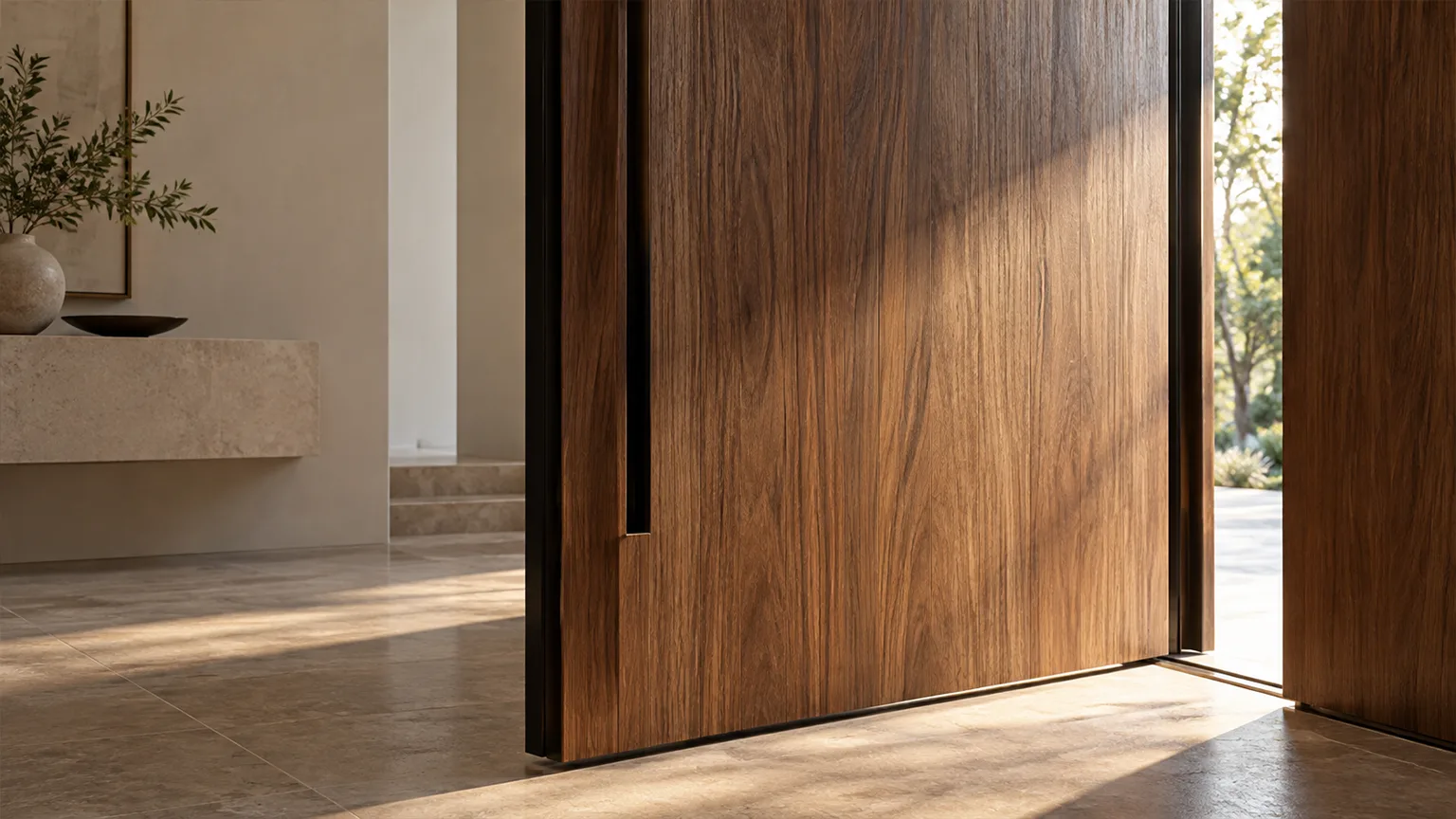
Wood brings a human quality to an entrance. Its grain, tone and subtle variation can connect the exterior of a home with interior millwork, flooring or furniture.
A wood-clad entrance can work beautifully in:
- Contemporary homes that need warmth against stone, glass or concrete
- Transitional residences that balance classic and modern elements
- Mountain, forest or landscape-led projects
- Homes where the entrance should feel welcoming rather than monumental
- Interiors with visible oak, walnut or other wood elements
The key is to consider wood as a living-looking material rather than a perfectly uniform surface. Grain direction, stain tone and finish should be reviewed in relation to the building’s scale and exposure.
Wood also deserves a practical conversation about maintenance and environmental exposure. The right selection should reflect the project location, the degree of weather protection and the owner’s expectations for long-term care.
Metal: Definition, Contrast and Refined Strength
Metal can make an entrance feel precise, contemporary and quietly powerful.
Bronze-toned finishes can introduce warmth and depth. Dark metals can create a disciplined architectural line. Softer metallic textures can reflect changing daylight and make the door feel different from morning to evening.
Metal is especially effective when used to:
- Frame a stone, wood or porcelain surface
- Create contrast on a pale façade
- Match exterior window profiles or lighting fixtures
- Define a large entrance with thin, sharp lines
- Add a tailored contemporary character to a minimal residence
The finish should be considered alongside the handle, frame, lighting and nearby window systems. A metal door surface can feel beautifully integrated when these elements belong to one visual family.
Leather: A Tactile Detail for Tailored Interiors
Leather adds softness, texture and a highly tailored sense of luxury.
It is often most effective as part of an interior-facing design concept, a protected entrance area or a custom composition where the material can be appreciated at close range. Leather can complement warm metal, dark wood and refined stone, giving the door a more personal and crafted character.
When considering leather, ask:
- Is the material appropriate for the door’s intended location and exposure?
- Does it connect to the interior palette?
- How will its texture appear in daylight and artificial light?
- Does the design need a bold contrast or a tonal composition?
- What maintenance expectations are appropriate for the project?
Leather should be used with intention. It is most successful when it feels like part of a complete interior-architecture story rather than a decorative afterthought.
Light Is a Material Too
Lighting changes every entrance material.
A door that looks understated in full daylight may become deeply textured at night. A reflective metal finish may feel warm under indirect lighting and cold under a poorly placed fixture. A stone surface may lose all of its depth if the illumination is too flat.
When planning entrance lighting, review:
- The direction of the light
- The height and distance of fixtures
- The balance between wall light, landscape light and interior glow
- Whether the material should be washed, grazed or softly revealed
- The handle and threshold visibility
- The appearance of the entrance from the street after dark
Avoid lighting that creates glare on glass, flattens texture or turns a refined material into a shiny surface. The best entrance lighting reveals detail while preserving a sense of calm.
Combine Materials With a Clear Hierarchy
Luxury does not require using every available material.
The strongest compositions usually have one primary material, one supporting material and carefully controlled details.
For example:
- Stone as the primary surface, with dark metal framing and a restrained pull bar
- Warm wood as the primary material, paired with bronze-toned hardware and soft wall lighting
- Porcelain as the main architectural surface, balanced with a metal reveal
- A dark metal door with leather or wood on the interior-facing side
- A pale façade with a single, deep-toned entrance door as the focal point
The objective is hierarchy. Every material should have a role.
If the façade, door, frame, handle, lighting, landscaping and interior finishes all compete for attention, the entrance can feel expensive without feeling resolved.
Use Collections as a Design Starting Point
A collection can offer more than a ready-made look. It can give the design team a clear material language, proportion system and composition to build from.
Minerva’s Exclusive Collections include different approaches to surface, geometry, light and detail.
The Fortissimo Collection is one example of a design language that combines porcelain, metal, geometry and dimensional surface treatment. It demonstrates how material changes when it is used as part of a composition rather than simply applied as a finish.
A collection can be an ideal starting point for a custom project. The final entrance should still respond to the home’s specific architecture, scale and palette.
Review Samples in Real Conditions
Digital renders and online images are useful, but they should not be the final basis for selecting luxury door materials.
Before final approval, review physical samples in conditions that reflect the actual project:
- In direct daylight
- In shade
- Under evening lighting
- Beside façade stone or cladding
- Next to window frames and hardware
- Alongside interior flooring or millwork
- At a scale large enough to understand texture and pattern
A small sample may not reveal how a material will behave across a tall door. Large-scale mock-ups, shop drawings and finish boards are especially valuable for projects with stone veining, pronounced grain, reflective metal or backlighting.
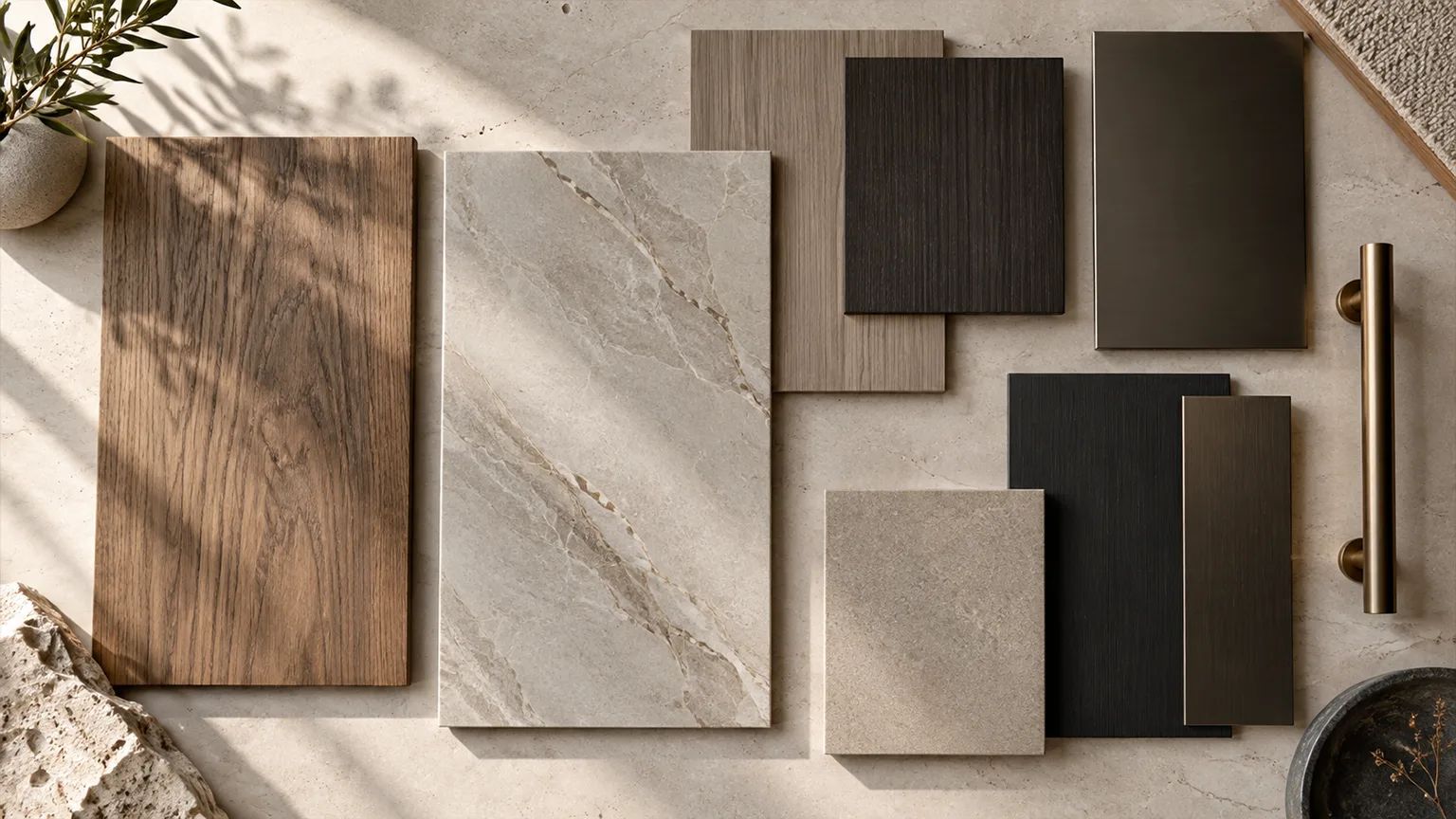
A Material-Selection Checklist
Before approving the final door finish, confirm:
- The material suits the architecture and façade
- The interior and exterior sides of the door are coordinated
- Samples have been reviewed in appropriate lighting
- Grain, veining, texture and direction are understood
- Frame, handle and threshold finishes complement the main surface
- The material is appropriate for the intended location and exposure
- Maintenance expectations have been discussed
- The selected collection or custom composition has been documented
- Final finish approvals are complete before fabrication begins
Create an Entrance With Lasting Presence
The right materials make a secure entrance feel personal, architectural and complete.
Whether the design begins with stone, wood, metal, leather, porcelain or light, every choice should support the larger story of the home. A custom door is not merely an opening in a wall. It is the point where structure, security and design meet.
Contact Minerva to discuss materials, finishes and collections for your custom luxury entrance.
Frequently Asked Questions
Which material is best for a luxury entrance door?
There is no single best material. The right choice depends on the architecture, location, façade palette, desired maintenance level, lighting and the feeling the entrance should create.
Can more than one material be used on a custom door?
Yes. Stone, porcelain, wood, metal and leather can be combined when the composition has a clear hierarchy and the materials relate naturally to the architecture.
Should the exterior and interior sides of the door match?
They do not need to match exactly. However, they should feel intentionally connected to the façade outside and the interior design inside.
How important is lighting when selecting door finishes?
Lighting is essential. It changes the perceived colour, texture, reflection and depth of every material. Samples should be reviewed in daylight and evening conditions before final approval.
Can a security door still use refined natural materials?
Yes. A secure entrance can be designed with high-end finishes and custom materials while maintaining an integrated architectural appearance.
