


How to design a discreet panic room (safe room) in a luxury residence is a question increasingly raised by VIP homeowners, diplomats, and high‑net‑worth individuals who require elevated personal protection. Modern secure spaces are no longer cold, bunker‑like chambers; in luxury properties, they are engineered as invisible protective environments—fully integrated into architecture, interior design, and daily life while remaining tactically effective during a crisis.
This guide explains the architectural, structural, and security‑engineering principles behind creating a truly discreet, high‑performance panic room that protects occupants without disrupting the elegance of the home.
1. Clarifying the Mission: What a Panic Room Must Actually Do
A modern panic room in a luxury residence is not simply a reinforced space—it is a controlled protective environment that serves three essential purposes:
- Delay attackers long enough for response teams to arrive
- Deny access through structural and technological barriers
- Protect occupants with life‑safety systems and communication redundancy
Discretion is equally important: a panic room must not draw attention or be easily identified during a hostile intrusion.
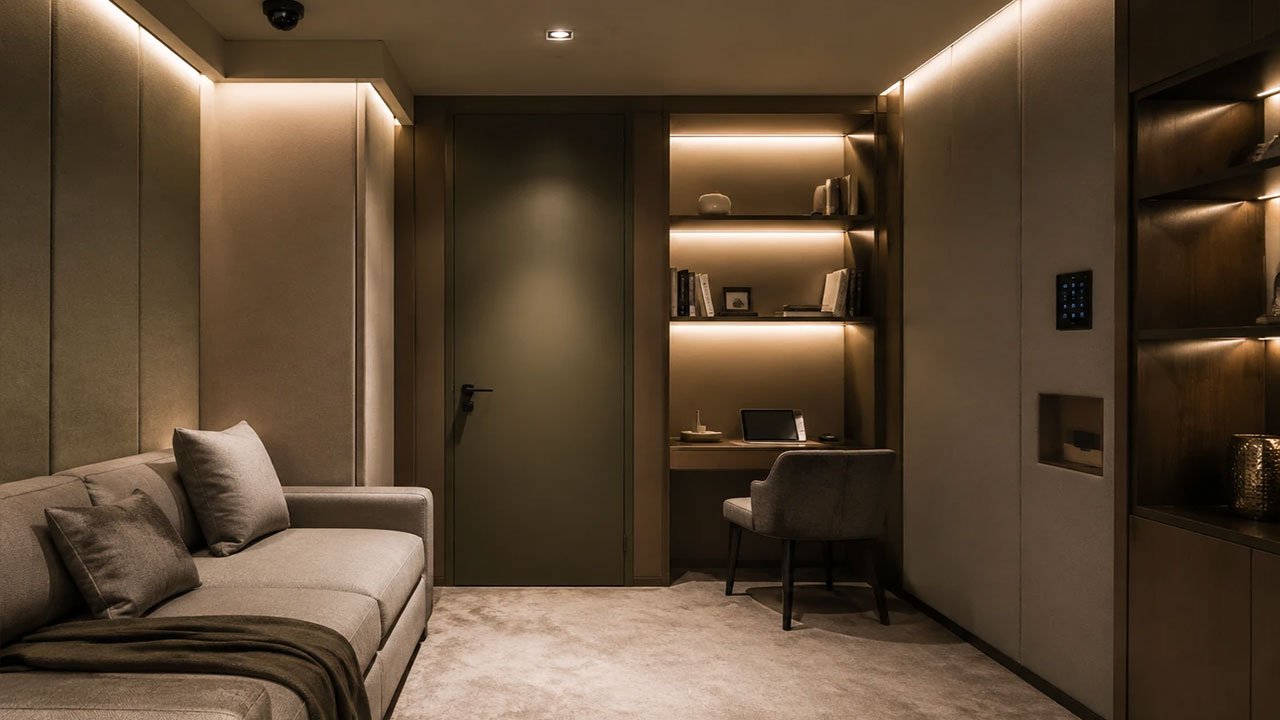
2. Location Strategy: Where to Hide a Secure Room in a Home
Selecting the right location is the first—and most underestimated—security decision. For VIP residences, the room should allow occupants to reach it in under 10–15 seconds, even under stress.
Optimal locations include:
- Behind a master suite (walk‑in closet conversion is common)
- Adjacent to a private office or study
- Integrated into a secondary hallway or staff‑only corridor
- Hidden within a basement zone with controlled access
- Embedded behind architectural paneling on upper floors
Key Principle:
The path to the panic room should follow the natural flow of daily movement, reducing the need for conscious decision-making during an emergency.
3. The Heart of the System: A Certified Armored Door (RC4/RC5)
The door is the true defensive component of a safe room. Walls can be reinforced easily; entrances cannot.
For high-risk individuals, the recommended classifications are:
- RC4 for high-end homes with moderate risk
- RC5 for VIP, diplomatic, or high-threat profiles
A luxury-grade panic room door often includes:
- Ballistic or high-strength steel core
- Multi‑point locking system
- Reinforced steel frame anchored to the structural slab
- Anti‑drill, anti‑cut, anti‑grinder plates
- Hidden hinges or disguised jamb systems
- Optional fire resistance rating
The door can be fully camouflaged with:
- Wood veneer
- Wall paneling
- Textile or acoustic cladding
- Bookcase fronts
- Stone slabs
The goal is to make the entrance indistinguishable from its surroundings.
4. Structural Reinforcement Without Visual Impact
The safest panic rooms use a combination of discreet structural upgrades:
- Reinforced gypsum or concrete board double‑layers
- Steel mesh or Kevlar composite panels
- Reinforced ceiling structure (to prevent top-down access)
- High-strength, non‑shatter glazing (if windows exist)
- RF‑shielding for communications privacy (optional)
These materials are concealed behind standard architectural finishes, preserving the home’s premium aesthetic.
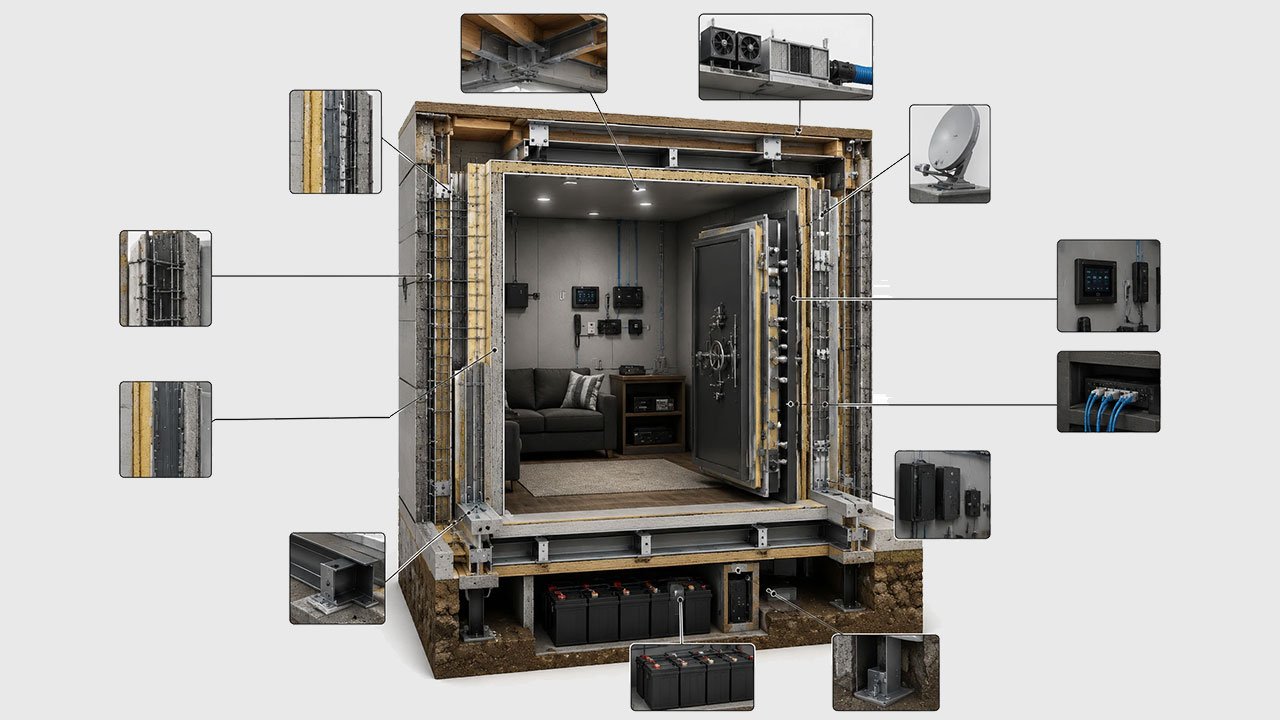
5. Life-Support Systems: What Must Be Inside
A well-designed panic room protects not only from intrusion but also from isolation. A luxury safe room must include:
- Redundant communications: landline, cellular booster, satellite communicator
- Independent ventilation with filtered air intake
- Emergency lighting and battery systems
- CCTV feed from key points around the residence
- Silent alarm buttons manually accessible
- Water and emergency nutrition supply
- Medical kit and trauma essentials
- Backup power for at least 12–24 hours
For VIP installations, add-ons may include:
- Positive‑pressure ventilation
- Ballistic wall upgrade
- Fire suppression modules
- Environmental monitoring sensors
6. Designing for Comfort, Not Confinement
High‑net‑worth individuals typically require a panic room that provides psychological comfort as much as physical protection. The interior should feel calm, luxurious, and familiar—not like a bunker.
Recommended elements:
- Soft, warm lighting
- Acoustic insulation and sound-dampened walls
- Climate control integration
- Ergonomic seating or a small daybed
- Storage integrated inside wall cavities
- Hidden safe for documents or valuables
The best designs make the room feel like a small private study, not an emergency shelter.
7. Digital Security: The Silent Layer of Protection
Physical security is only half the equation. A discreet panic room must also include digital hardening:
- Encrypted access control
- Concealed biometric reader behind a movable element
- Local network isolation
- Redundant power-independent camera feed
- Immediate lockdown protocol when activated
Some advanced systems include AI‑driven threat detection, integrating sensors across the residence to trigger lockdowns automatically.
8. Discreet Integration: Making the Room “Disappear” in Plain Sight
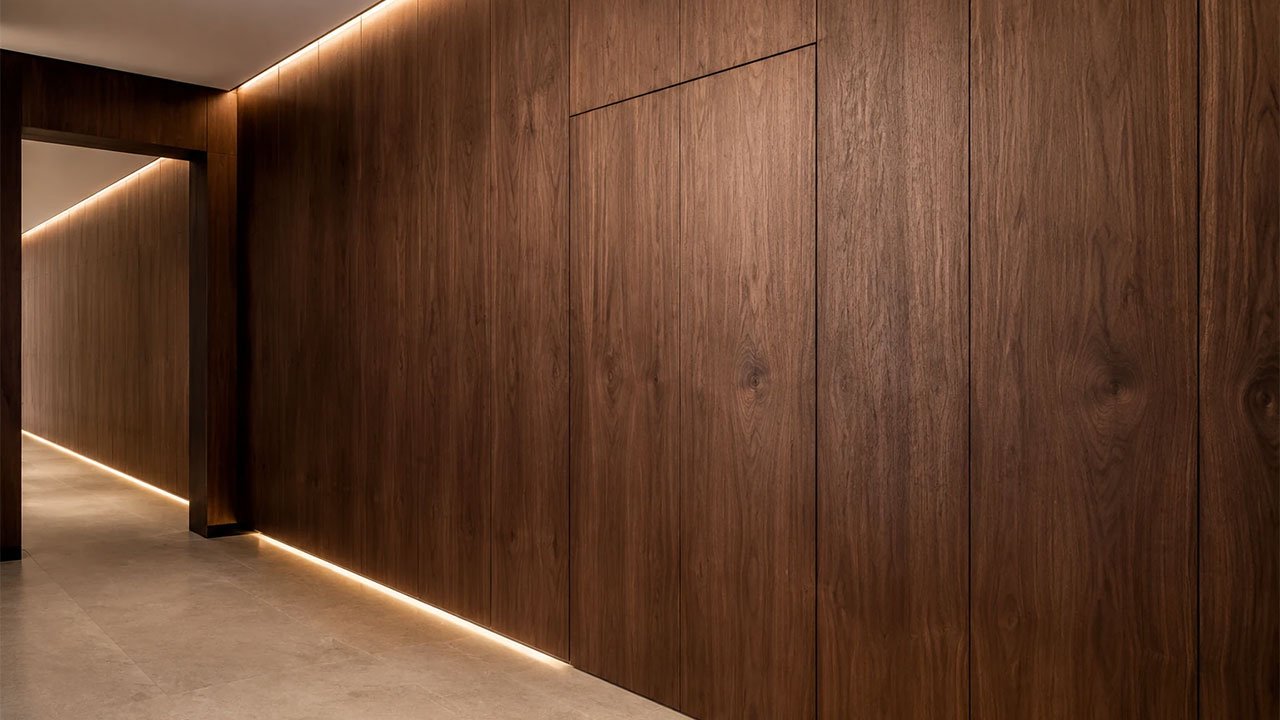
A truly successful panic room is one that cannot be found.
Common concealment methods:
- Wall paneling with invisible seams
- Pivot bookcase integration
- Fabric-wrapped acoustic wall sections
- Stone or veneer panels with hidden access points
- Mirror or artwork disguises
- Secondary corridor placement behind architectural features
Discretion ensures attackers do not even attempt to breach the room, increasing occupant safety dramatically.
9. Professional Execution: Why Expertise Matters
Designing a panic room for a VIP or diplomat involves balancing:
- Architecture
- Structural engineering
- Security protocols
- Human behavior under stress
- Technology integration
This complexity requires collaboration between:
- Architect
- Security consultant
- Structural engineer
- Installer certified in RC-rated systems
- Technology/security integrator
Luxury panic rooms succeed only when these disciplines operate seamlessly.
Final Thoughts: Invisible Security, Maximum Peace of Mind
A discreet panic room in a luxury residence is more than a safe space—it is a strategically engineered sanctuary. When designed correctly, it blends completely into the home while providing unmatched protection during moments of extreme risk.
For VIPs, diplomats, and security‑conscious HNWIs, this combination of stealth, strength, and comfort makes the modern panic room an essential component of high-security residential architecture.
