


Ask ten owners what they paid for an armored entrance and you will hear ten different numbers. That is not because pricing is mysterious. It is because a luxury armored door is a custom-engineered system, not a catalog item. Size, security rating, opening system, cladding and installation can each move the final figure significantly.
This guide explains what drives the cost of a custom armored door, how to plan your budget, and which questions to ask before you request a quote. We do not quote fixed prices here, because honest pricing depends on your project drawings.
Why Armored Doors Are Priced Per Project
A premium entrance combines a reinforced structure, locking systems, hardware, cladding, frame and often glass or automation. Each project has its own opening dimensions, wall conditions, architectural style and threat profile. Two doors that look similar from the street can differ greatly in what is inside.
For that reason, serious manufacturers price from drawings, not from a price list. The sections below show what goes into the number.
The Seven Biggest Cost Drivers
1. Security rating
The higher the resistance class, the more engineering, material and testing behind the door. Moving from RC3 to RC4 or RC5 means stronger structure, more demanding locking points and tighter tolerances. If you are unsure which level you need, read our guide to RC3, RC4 and RC5 classifications first, so you pay for the protection you actually need and not more.
2. Size and weight
Oversized and full-height doors need heavier structures, special pivots and carefully engineered hinges or hardware. A very large opening may also require lifting equipment on site. See how giant pivot doors are engineered to move smoothly at scale.
3. Opening system
Pivot, hinged, concealed hinged, sliding and translating systems differ in mechanism, wall preparation and hardware complexity. A flush-to-wall door with a hidden frame, for example, requires closer coordination with the wall build-up than a conventional hinged door. Our post on flush-to-wall security doors explains why.
4. Cladding and finish
The face of the door is where taste meets budget. Wood veneer, laminate, aluminum, porcelain, leather, bronze, copper, natural stone and onyx all behave differently in cost, weight and handling. Natural stone and backlit onyx add material and fabrication costs, and weight, as we discuss in our guide to marble and stone doors.
5. Glazing
Glass sections, side lights and transoms change the structural design. Security-rated glass is a specialist component, and larger panes increase both price and weight.
6. Hardware, access control and automation
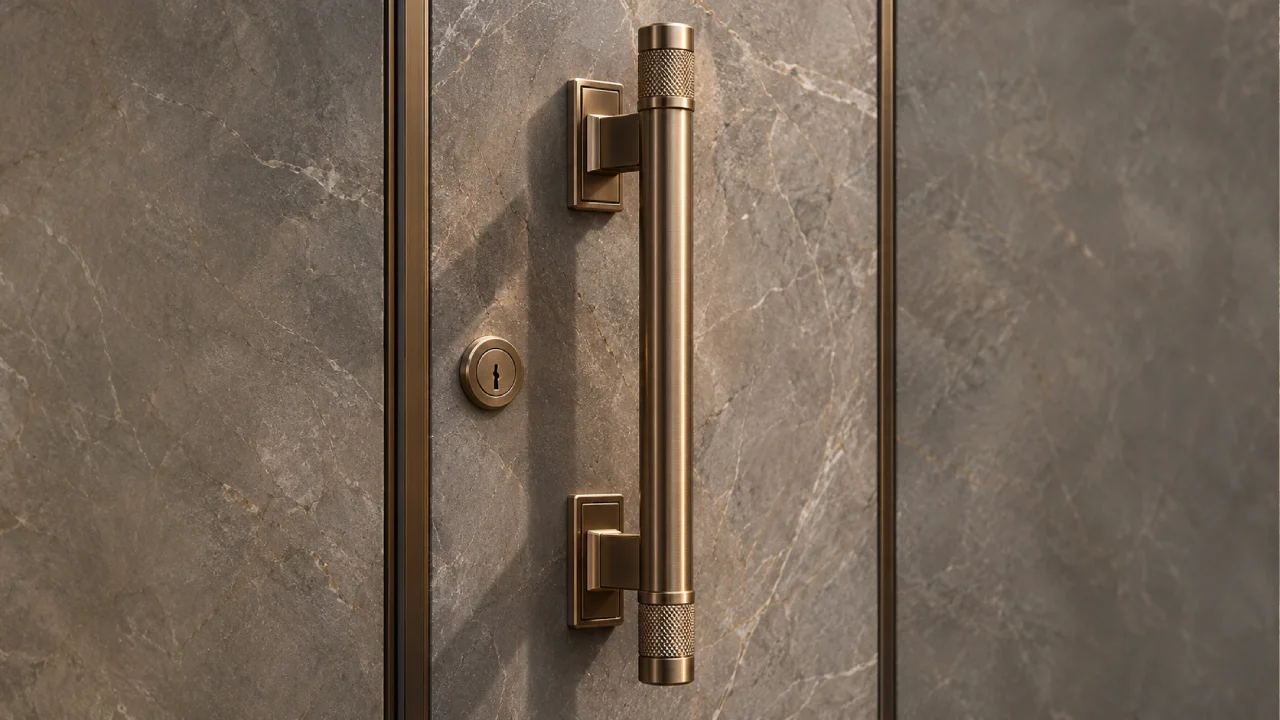
Custom pull bars, premium handles, multi-point locks, electronic access and motorized operation all add to the total. Planning wiring and power early avoids costly changes later.
7. Logistics, installation and commissioning
A door made in Italy and installed in North America involves international freight, customs, handling and a skilled installation team. Structural preparation of the opening, final adjustment and testing should be part of the budget, not an afterthought.
Typical Project Timeline
Lead times vary with specifications, but most custom projects follow the same stages:
- Consultation and drawings: confirm opening dimensions, rating, style and finishes.
- Technical approval: shop drawings are reviewed and signed off.
- Production: the door, frame and cladding are fabricated, which is the longest stage for complex finishes.
- Shipping and delivery: international transport, customs and site delivery.
- Installation and commissioning: fitting, adjustment and testing.
Sharing your construction schedule early lets the manufacturer plan production around your milestones.
How to Budget Wisely
- Fix the security requirement first. Decide the rating before choosing finishes, so aesthetics never quietly reduce protection.
- Budget the opening, not just the door. Wall reinforcement, electrical conduits and finishing work belong in the same line.
- Allow a contingency for design changes, especially with stone, glass or automation.
- Compare like with like. A lower quote may exclude the frame, installation, certification or shipping.
- Think lifecycle. A well-made door protects the home and the investment for decades, and it can add to a property’s perceived value. We cover that in how a luxury front door increases property value.
What to Send When You Request a Quote
To receive an accurate estimate, prepare:
- Architectural plans and elevations showing the opening
- Approximate dimensions and wall construction
- Desired security rating, or the threat concerns you want to address
- Preferred opening type and finishes, with reference images
- Whether you want glass, smart access or special hardware
- Project location and target dates
Frequently Asked Questions
Is an armored door a one-time cost?
The door is a long-term investment, but plan for periodic hardware servicing and, if applicable, electronics updates.
Does a higher price always mean better security?
No. Price also reflects size, finish and design complexity. Compare the tested security class, not just the cost.
Can I reduce cost without reducing security?
Often yes, through simpler cladding, standard door sizes or a conventional opening system, while keeping the security rating unchanged.
Do you ship to the US and Canada?
Yes. Minerva Luxury Designs serves customers across the United States and Canada from its Richmond Hill, Ontario showroom.
Plan Your Entrance With Confidence
The best way to understand cost is to look at your own drawings. Browse our security doors, see finished entrances in the project gallery, then contact us to request a project consultation and a tailored quote.
