


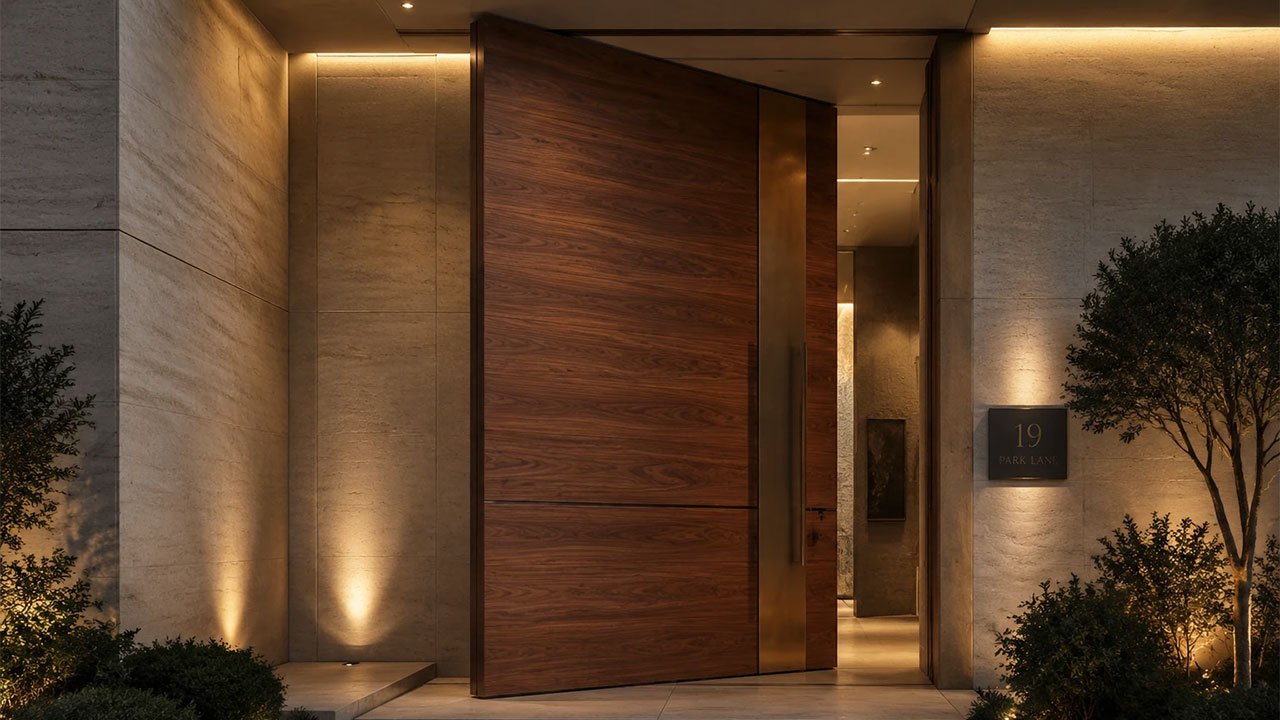
Aesthetic armor—can bulletproof doors be beautiful? For many VIP homeowners, diplomats, and security‑conscious high‑net‑worth individuals, this question sits at the intersection of architecture and personal protection. Traditional security doors often project an industrial appearance that conflicts with the refined aesthetics of luxury residences. Today, however, advances in materials engineering and architectural fabrication allow bulletproof doors to provide exceptional ballistic protection while remaining visually indistinguishable from high-end architectural elements.
In modern luxury homes across the United States and Canada, security no longer needs to announce itself. Instead, it can be quietly embedded within sophisticated design.
1. Understanding What “Bulletproof” Actually Means
In architectural security, the term “bulletproof” typically refers to ballistic-resistant construction, certified under standards such as UL 752 or EN ballistic classifications.
These ratings determine the types of firearms and ammunition that a door assembly can withstand. A properly engineered ballistic door system protects against threats ranging from handgun rounds to high‑powered rifle fire, depending on its certification level.
A true bullet‑resistant door system includes more than just a reinforced slab. It requires:
- Ballistic steel or composite cores
- Reinforced frames anchored to the surrounding structure
- Multi‑point locking systems
- Protected lock cylinders and hardware
- Ballistic-rated glazing (if glass panels are included)
Without these integrated components, the ballistic resistance of the door itself can be compromised.
2. The Evolution of Luxury Security Doors
Historically, high-security doors were visibly defensive—thick steel plates, exposed hinges, and industrial finishes. While effective, they were rarely appropriate for refined residential architecture.
Today’s high-end bullet‑resistant doors rely on multi-layer composite engineering, allowing the protective structure to remain completely hidden inside the door core.
The external surface can then be customized with architectural materials such as:
- Natural hardwood veneers
- Bronze or brass panels
- Stone or marble slabs
- Custom metal cladding
- Architectural lacquer finishes
This separation between structural protection and exterior aesthetics is what makes modern “aesthetic armor” possible.
3. Engineering the Hidden Strength
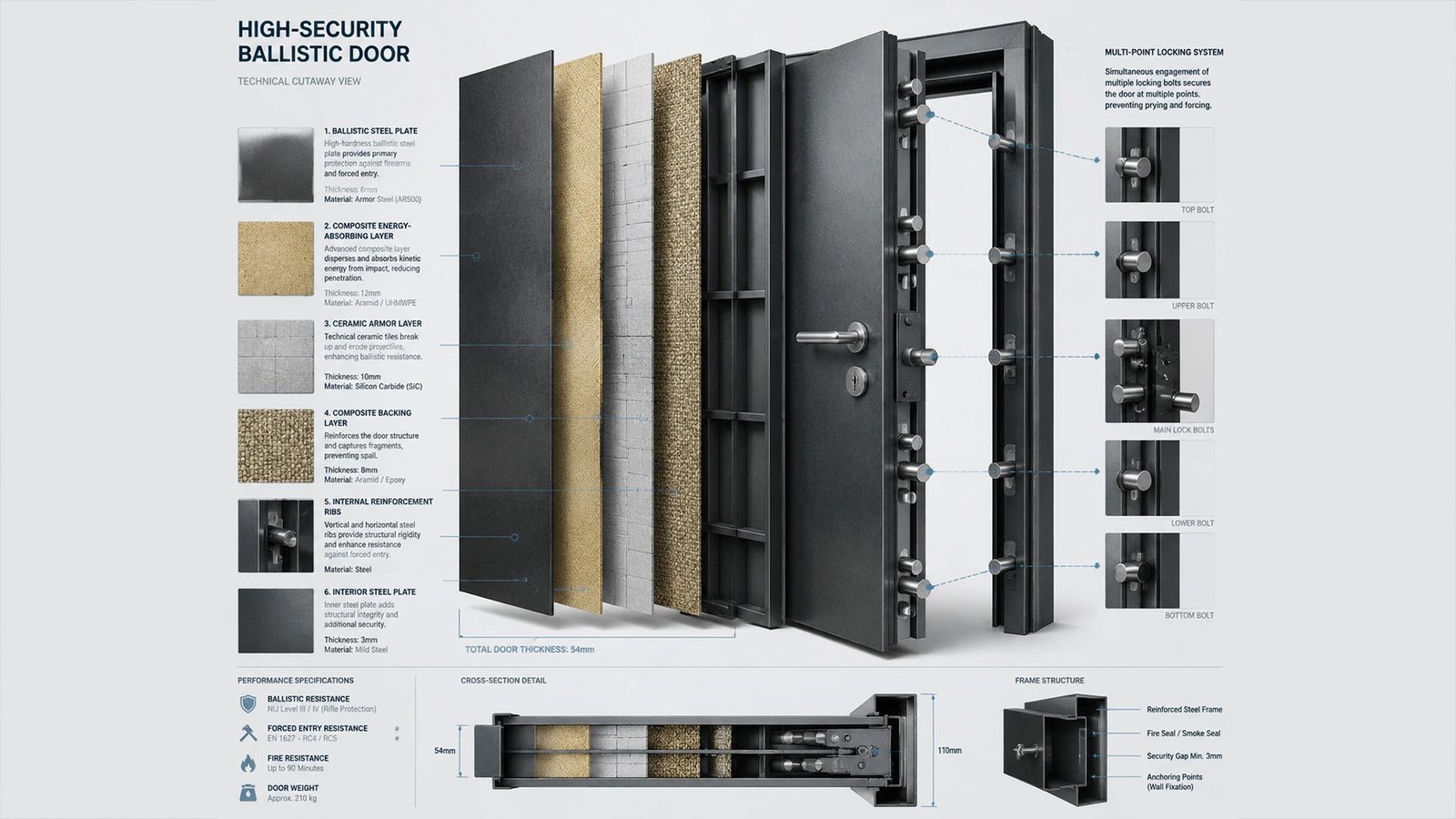
Behind the elegant exterior, ballistic doors rely on a layered defensive structure.
Typical internal components may include:
- Hardened ballistic steel plates
- Composite energy‑absorbing layers
- Reinforced internal framing
- Anti‑spall protection to prevent fragmentation
- Shock‑absorbing structural layers
These materials are carefully engineered to slow, deform, and disperse projectile energy rather than simply resist penetration.
For high-end installations, the door frame and surrounding wall section are also reinforced to ensure the entire system performs as a unified barrier.
4. Large Architectural Doors with Ballistic Protection
Luxury residences increasingly feature oversized pivot or architectural entry doors, sometimes exceeding three meters in height. Integrating ballistic protection into these large formats presents unique engineering challenges.
Specialized hinge systems and pivot mechanisms are required to support the increased weight created by ballistic materials.
Key design considerations include:
- Load-bearing pivot systems capable of supporting several hundred kilograms
- Perfect structural alignment to maintain smooth operation
- Reinforced internal frames to prevent warping
- Precision fabrication to maintain flush architectural detailing
When engineered correctly, even massive armored doors can open with remarkable smoothness and precision.
5. Seamless Integration Into High-End Architecture
One of the defining characteristics of luxury security design is visual discretion.
Architects increasingly integrate bullet‑resistant doors into:
- Minimalist façade systems
- Stone‑clad entrance portals
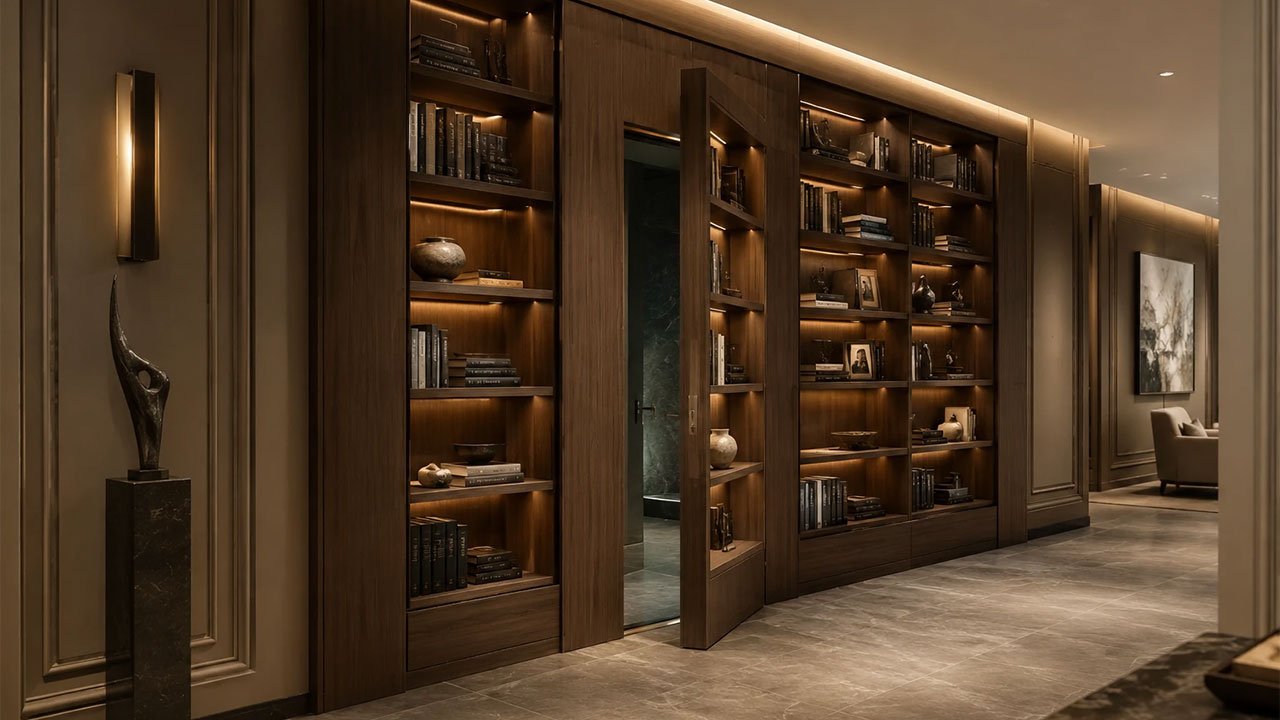
- Wood‑paneled interior corridors
- Hidden safe‑room entries
- Private office or study entrances
Because the ballistic structure is concealed inside the door, the finished installation can appear identical to any other premium architectural door.
In many cases, visitors or staff would never realize the door provides advanced ballistic protection.
6. Security Beyond Ballistics
Ballistic resistance is only one aspect of comprehensive security.
High-end bulletproof doors often incorporate additional protective features, including:
- RC4 or RC5 burglary resistance
- Multi‑point locking systems
- Anti‑drill and anti‑cut plates
- Fire resistance ratings
- Acoustic insulation
- Electronic access control or biometric systems
Combining these elements transforms a bulletproof door from a simple protective barrier into a complete security platform.
7. The Psychological Dimension of Invisible Security
For many high‑profile homeowners, security should provide peace of mind without disrupting daily life.
A visibly fortified environment can feel oppressive. By contrast, discreet protective systems allow residents to enjoy their homes naturally, without constant reminders of potential threats.
A beautifully designed ballistic door contributes to this balance: it protects quietly while maintaining the serene atmosphere expected in luxury architecture.
8. When Bulletproof Doors Make Sense
Ballistic doors are most commonly specified for:
- Residences of high‑profile public figures
- Diplomatic or consular properties
- Homes of executives with elevated security risks
- Safe rooms or panic rooms
- Secure home offices storing sensitive information
In these contexts, the goal is not to create a fortress—but to add a discreet layer of resilience to an already refined environment.
Final Thoughts: Security That Looks Like Design
The idea that security must compromise beauty is increasingly outdated. Modern engineering allows ballistic protection to be integrated seamlessly into luxury architecture.
A well‑designed bulletproof door should not look defensive or intimidating. Instead, it should appear as a natural extension of the home’s design language, quietly concealing its protective capabilities.
For VIP homeowners, diplomats, and security‑conscious HNWIs, this concept of aesthetic armor represents the future of residential security—where strength and sophistication exist in perfect balance.
