


Solid Wood vs Engineered Cladding is one of the most important material decisions in high-end door design. For interior designers and detail-oriented clients, the choice goes far beyond appearance. Both materials can produce exceptional visual results, but they behave very differently over time. In luxury residences across the U.S. and Canada, where climate swings, sunlight exposure, humidity, and long-term maintenance all matter, selecting the right finish can directly affect performance, longevity, and even the perceived quality of the entire entry sequence.
At first glance, solid wood often carries a natural emotional advantage. It feels authentic, warm, and timeless. Engineered cladding, by contrast, may sound more technical or less romantic. Yet in modern architectural practice, engineered cladding has become a preferred solution for many bespoke doors because it offers predictability, dimensional stability, and design flexibility that solid timber alone often cannot match.
The right choice depends on what the project demands most: purity of material, precision of finish, resilience to environmental stress, or a balance of all three.
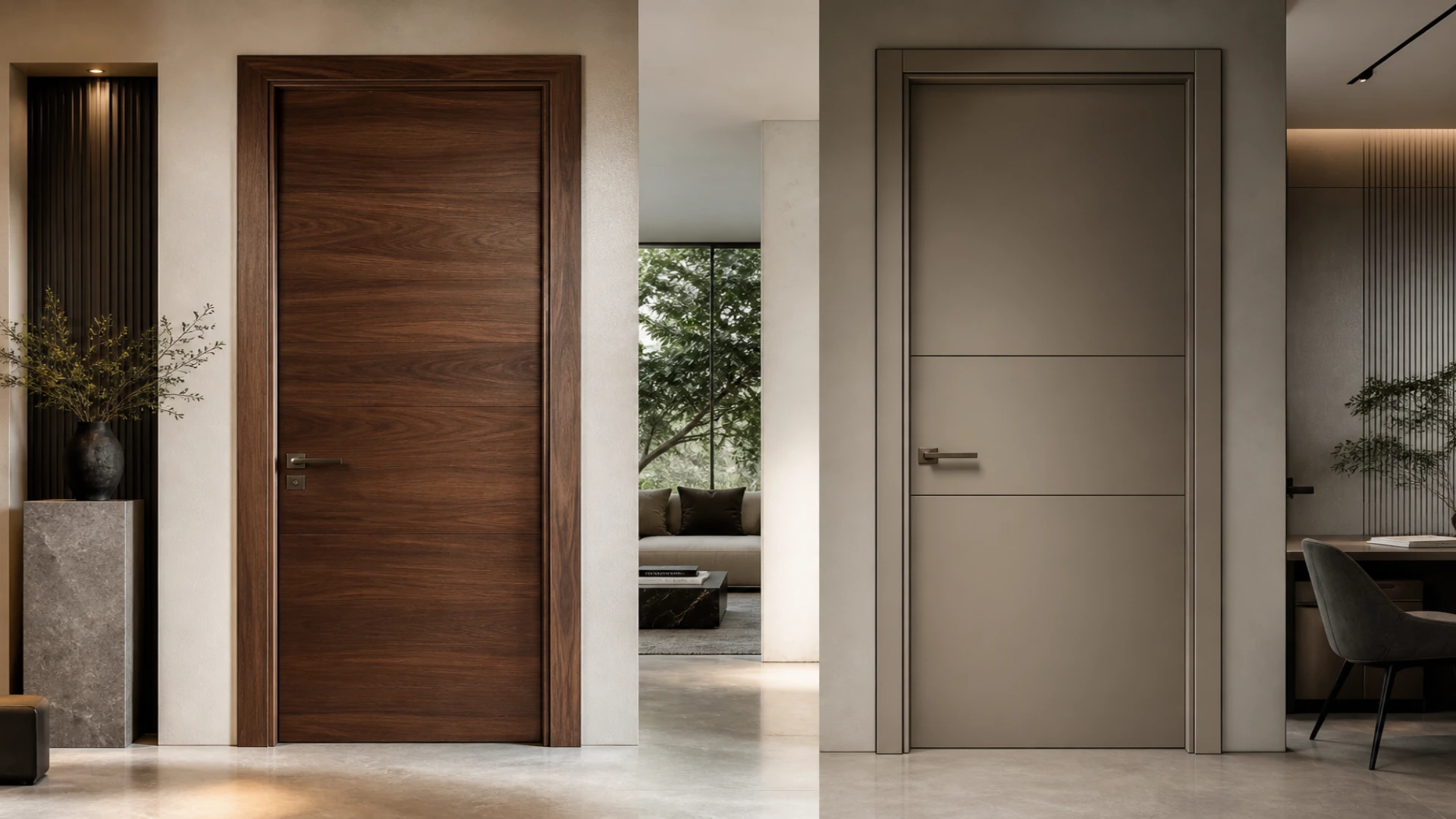
1. What Solid Wood Offers That No Substitute Fully Replicates
When clients ask for a door with warmth, depth, and natural character, solid wood remains the benchmark. Grain variation, tactile richness, and the subtle imperfections of real timber create a sense of authenticity that is difficult to imitate. Species such as walnut, oak, teak, and mahogany bring distinct personalities, from linear contemporary elegance to more traditional richness.
In premium interiors, solid wood doors often work best when the goal is emotional resonance. They soften hard architectural lines, complement stone and metal finishes, and add visual warmth to otherwise minimal spaces. For interior applications in climate-controlled environments, solid wood can perform beautifully for decades.
However, in the debate over Solid Wood vs Engineered Cladding, beauty alone is not the whole story. Wood is a living material. It expands, contracts, and responds to humidity. That movement is part of its nature, but in large-format doors or demanding environments, it can also create problems.
2. Why Engineered Cladding Has Become a Modern Luxury Standard
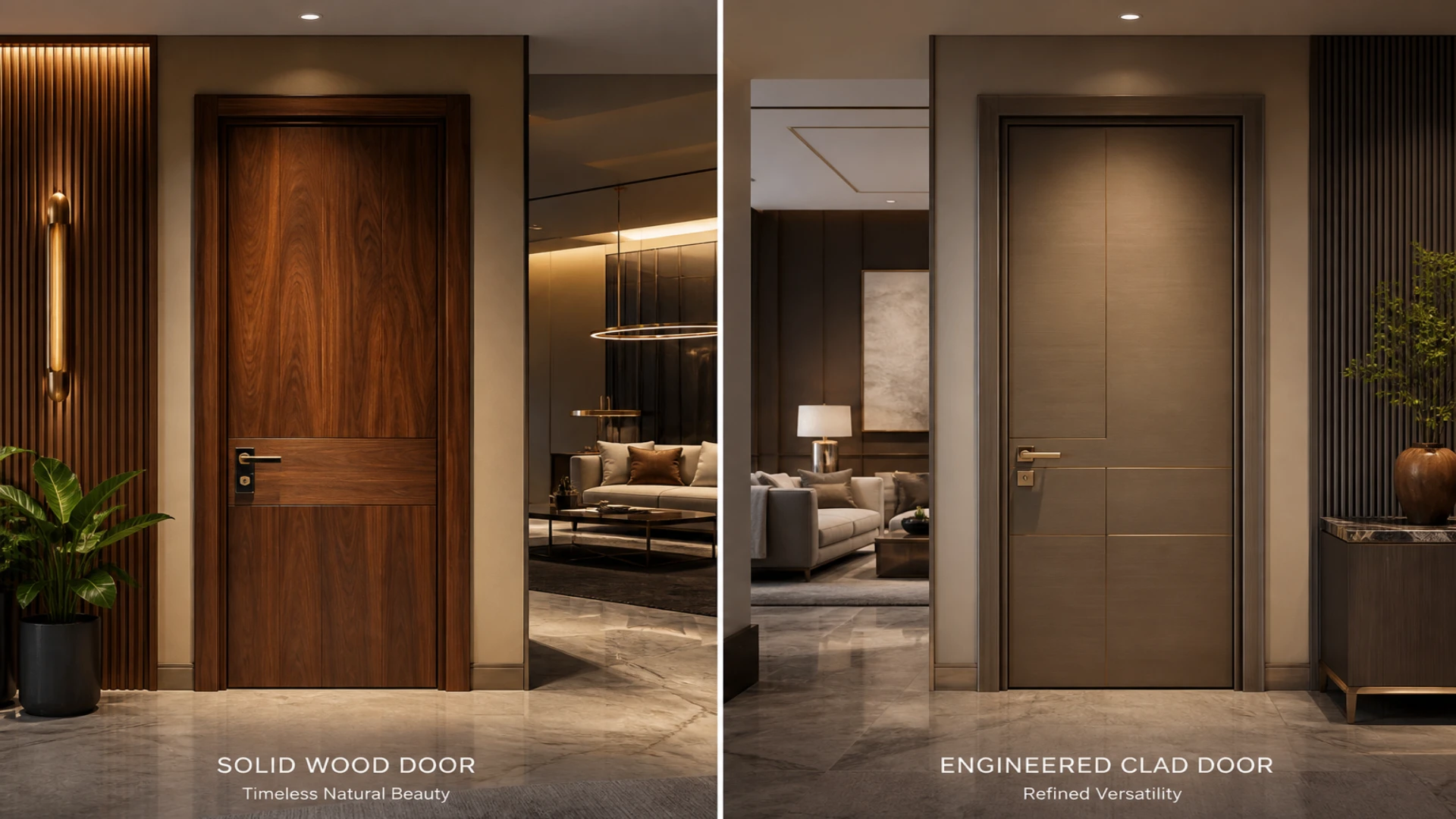
Engineered cladding is not a compromise material when done correctly. In many high-end projects, it is the more sophisticated technical solution. Typically, it consists of a real wood veneer or decorative finish applied over a stable substrate such as aluminum, composite, or engineered core panels. This construction allows designers to capture the visual appeal of wood while minimizing the risks associated with movement, warping, or cracking.
This is where Solid Wood vs Engineered Cladding becomes a question of performance intelligence. Engineered systems are designed to stay flatter, respond more predictably to climate changes, and integrate more easily with oversized doors, pivot systems, concealed hardware, and security cores.
For custom entry doors especially, engineered cladding often makes more sense because the structure of the door must support not only aesthetics but also mechanical reliability. A beautiful finish means little if the door becomes unstable, difficult to seal, or vulnerable to surface failure after repeated seasonal shifts.
3. Durability: Climate, Sunlight, and Daily Use
Durability is usually the deciding factor. Solid wood can be exceptionally durable, but it requires the right species, the right finish system, and the right environment. In dry climates, humid coastal regions, or areas with freeze-thaw cycles, wood can gradually move or weather in ways that demand ongoing attention.
Engineered cladding generally performs better in exposed or high-traffic applications because its layered construction reduces natural movement. This is particularly valuable for projects in North America and Canada, where doors may face significant differences between indoor and outdoor temperatures. When combined with advanced coatings and properly detailed edges, engineered cladding can deliver a consistent appearance with lower long-term risk.
In the context of Solid Wood vs Engineered Cladding, designers should think in terms of exposure level:
- Interior, climate-controlled spaces often favor solid wood.
- Exterior or oversized doors often favor engineered cladding.
- High-humidity or strongly sun-exposed areas typically benefit from engineered stability.
4. Style and Design Flexibility
From a design perspective, both options can be stunning, but engineered cladding offers more control. Solid wood has natural limitations based on board size, grain direction, and movement. Engineered cladding allows for larger continuous surfaces, more refined book-matching, cleaner symmetry, and easier integration with other materials such as bronze, stone, leather, or porcelain.
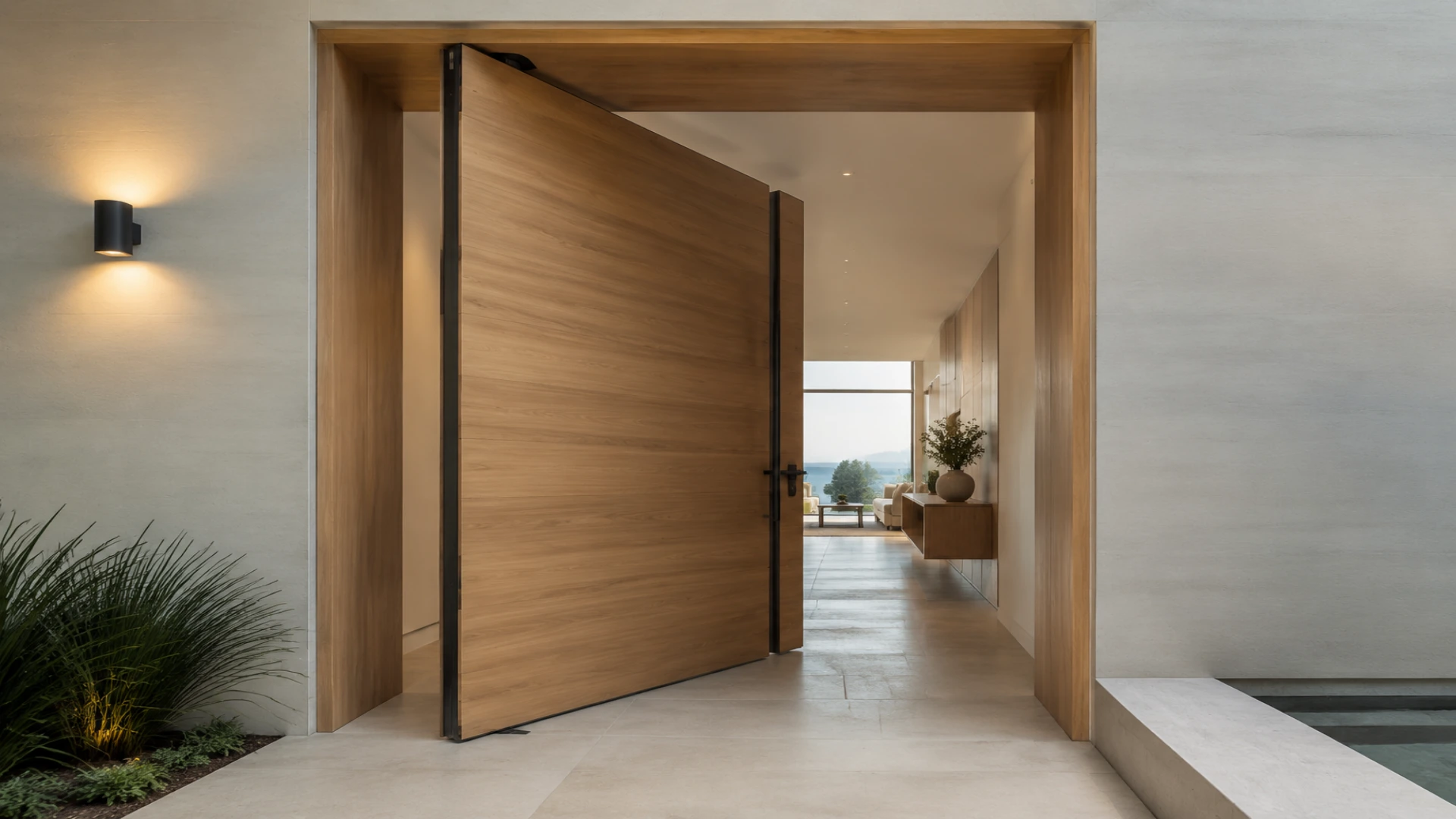
This makes engineered cladding especially attractive for contemporary projects where precision is part of the luxury language. Minimalist homes with flush panels, shadow gaps, concealed frames, or oversized pivot doors often rely on engineered construction to achieve those crisp lines.
Still, in the comparison of Solid Wood vs Engineered Cladding, solid wood wins when the design intent celebrates natural irregularity. If the client wants a door that feels handcrafted, organic, and materially honest, solid timber can bring a depth that highly controlled surfaces sometimes lack.
5. Maintenance and Long-Term Ownership
One of the most practical differences between the two materials is maintenance. Solid wood usually needs more attention over time, especially on exterior faces. UV exposure, moisture, and surface wear may require refinishing or protective treatment to preserve the original look.
Engineered cladding tends to be easier to manage because it is built for consistency. Many systems use high-performance factory finishes that resist fading, staining, and surface degradation more effectively than site-finished solid wood. For clients who want luxury without constant upkeep, this can be a major advantage.
That is why Solid Wood vs Engineered Cladding is often less about what looks best on day one and more about what will still look exceptional after five or ten years.
6. Choosing the Right Material for the Right Project
There is no universal winner. The best choice depends on the architectural intent, door size, exposure conditions, and client expectations.
Choose solid wood when:
- authenticity and natural grain variation are the top priorities
- the door is located in a stable interior environment
- the client values patina and accepts periodic maintenance
Choose engineered cladding when:
- dimensional stability is critical
- the design involves oversized or high-performance doors
- the project requires lower maintenance and cleaner detailing
- the finish must integrate with security, acoustic, or weather-resistant construction
Conclusion
The decision between Solid Wood vs Engineered Cladding is ultimately a choice between natural expression and engineered control. Both can be luxurious. Both can be beautiful. But only the right material, selected for the right context, will deliver lasting value.
For designers creating refined, high-performance spaces, the smartest specification is not always the most traditional one. It is the one that aligns material character with real-world performance.
For related inspiration, explore our articles on Natural Marble and Stone Doors and Industrial Elegance Custom Doors.
