


Blast-resistant entry systems have quietly become the most critical architectural upgrade for high-profile homeowners, diplomats, and security-conscious HNWIs (High-Net-Worth Individuals). In an era where perimeter security is no longer an afterthought, elite estates across North America are pivoting toward solutions that offer proactive protection against catastrophic threats. Unlike standard security measures, these systems do not merely deter intruders; they preserve the structural integrity of the home envelope during high-pressure events.
For those managing high-visibility properties, integrating these systems is not just a defensive necessity—it is an investment in the ultimate luxury: absolute peace of mind.
1. Why Elite Homeowners Are Making the Switch
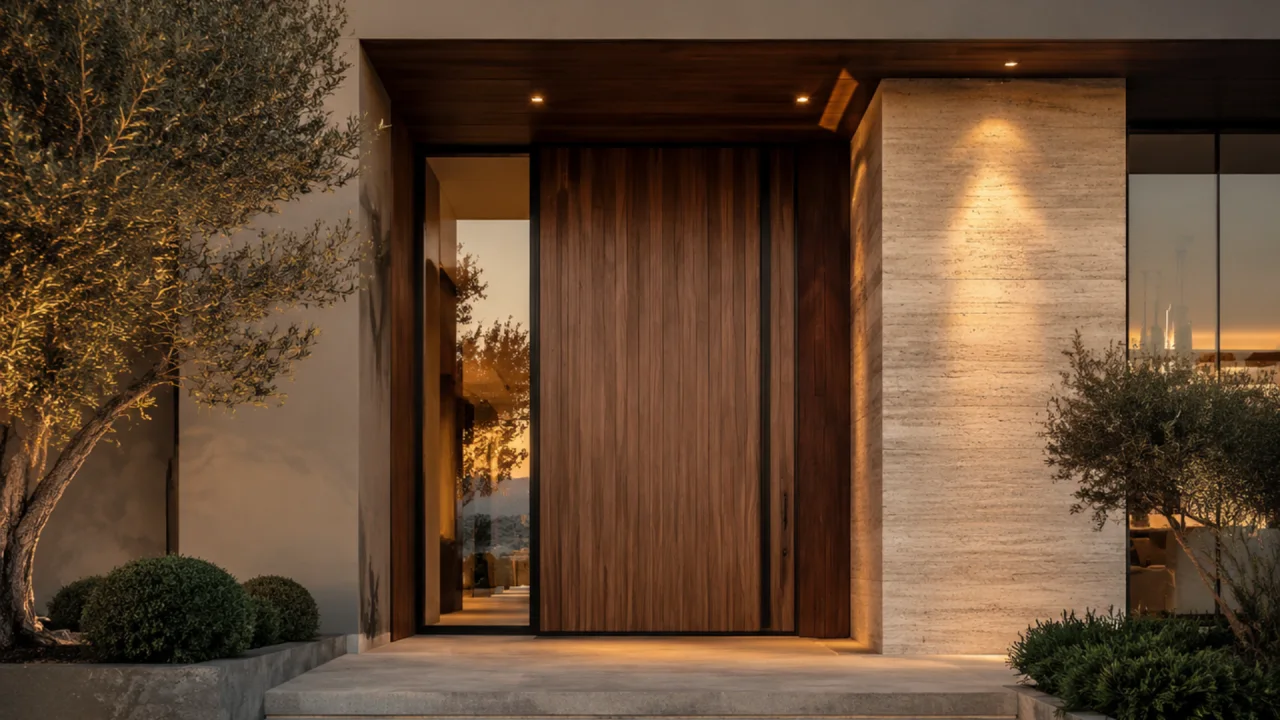
The primary motivation for switching to blast-resistant entry systems lies in the evolution of threat assessment. Traditional security—such as surveillance cameras and motion sensors—is reactive. It alerts you after a breach has occurred. In contrast, blast-resistant engineering is proactive.
Diplomats and public figures face unique risks that standard residential doors cannot mitigate. A blast-resistant system is designed to neutralize the massive shockwaves generated by an explosion. By absorbing and dissipating this energy, the door prevents the “domino effect” where structural failure leads to the collapse of interior spaces. For an ultra-luxury residence, this level of resilience is increasingly seen as the baseline requirement for a safe environment.
2. The Physics Behind High-Security Entry
It is vital to distinguish between ballistics and blast resistance. Many homeowners mistakenly believe a bulletproof door is sufficient protection. However, a door that stops a projectile may still fail catastrophically under the impulse loading of an explosion.
Engineered blast-resistant entry systems utilize complex physics to maintain their seal:
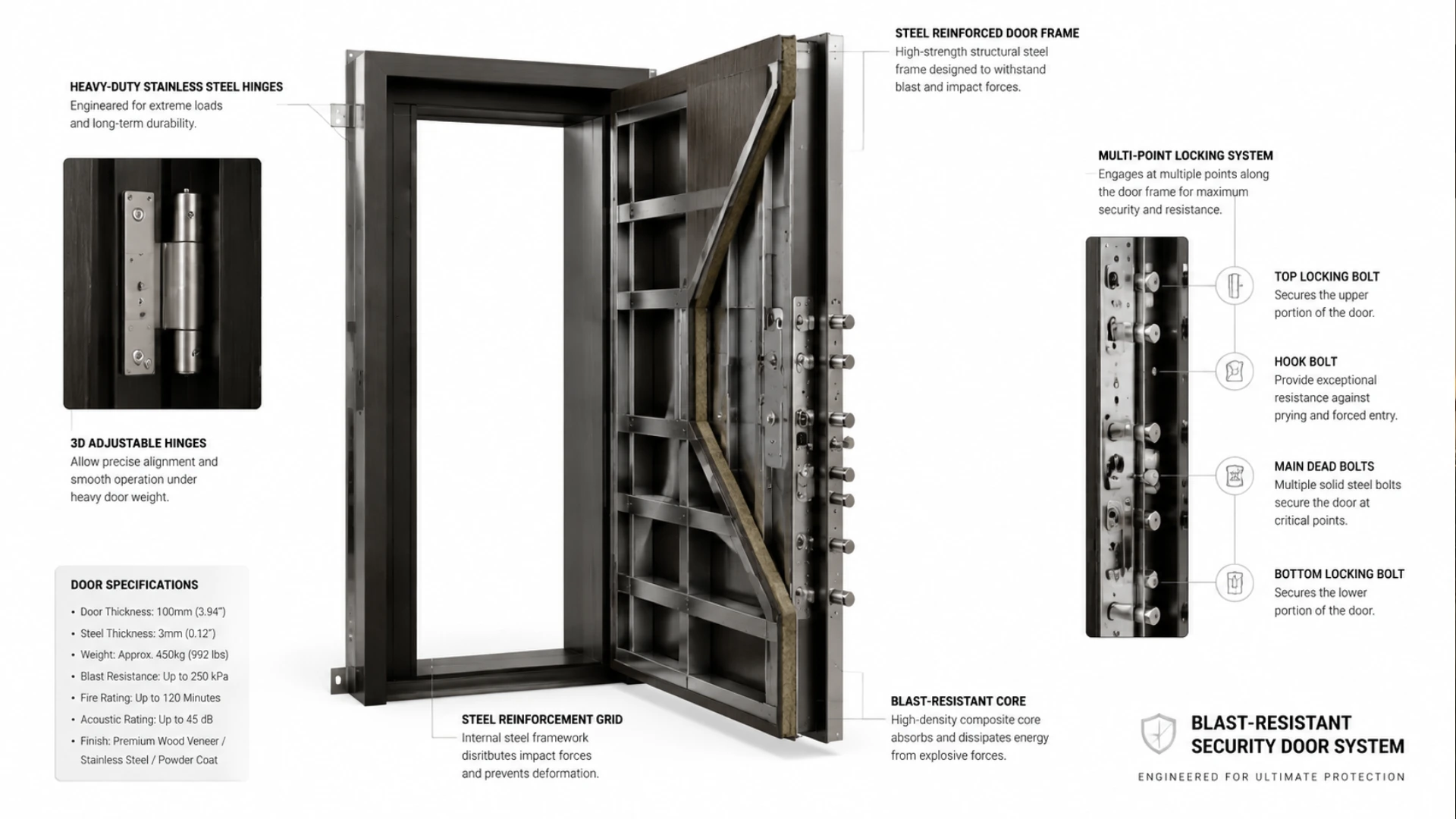
- Energy-Dissipating Frames: Unlike standard frames, these are anchored deeply into the residence’s reinforced concrete or structural steel.
- Composite Core Reinforcement: Utilizing lightweight ceramics or ballistic-grade aramid fibers, these systems distribute the pressure load across the entire surface area of the door leaf.
- Flexible Sealing Technology: The system prevents the propagation of pressure waves that can cause secondary structural damage inside the home.
For those interested in technical specifications, agencies like ASTM International provide rigorous testing protocols, such as ASTM F2927, which define how these doors must perform under specific PSI (pounds per square inch) loads.
3. Aesthetic Integration: The “Invisible Security” Concept
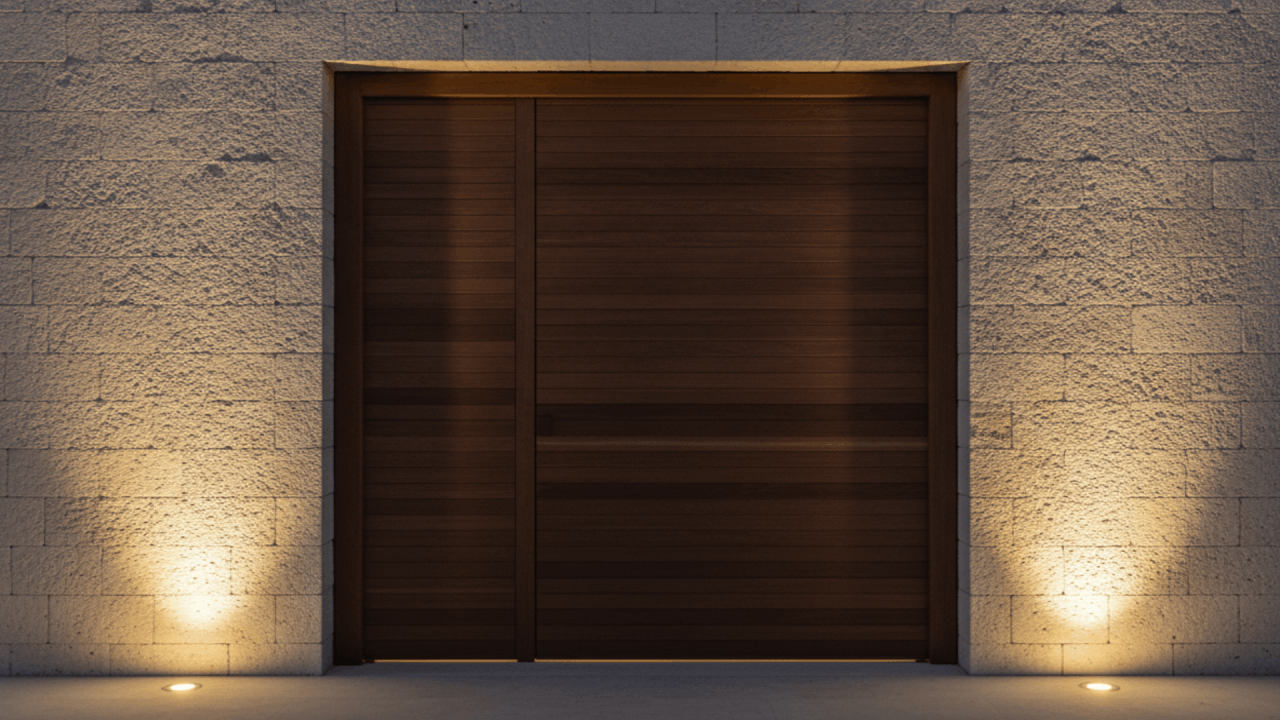
A common concern among architects and designers is the “bunker effect.” Elite homeowners demand security, but they refuse to sacrifice the aesthetic brilliance of their properties. Modern engineering has successfully solved this dilemma.
Today, blast-resistant entry systems can be completely customized. High-security steel substrates are now routinely clad in premium materials such as:
- Hand-finished exotic hardwoods
- Architectural bronze or copper patinas
- Bespoke stone and masonry overlays
The hardware remains invisible, and the heavy-duty mechanics are concealed within the door leaf and frame. This allows architects to maintain their original design intent while providing the residence with a fortified barrier that remains indistinguishable from standard, high-end millwork.
4. Compliance and Global Standards
When procuring blast-resistant entry systems, it is essential to work with consultants who adhere to recognized global standards. Beyond ASTM, protocols like ISO 16933 ensure that a door system has been tested against real-world scenarios.
Selecting a system that is certified rather than just “rated” is a critical distinction for security-conscious homeowners. These certifications guarantee that the door will provide a controlled, protected space during the most extreme events.
 Conclusion
The shift toward blast-resistant entry systems represents a move toward true resilience in modern luxury architecture. By merging advanced materials science with refined design, high-profile homeowners no longer need to choose between a “bunker” and a beautiful home. They can have both.
If you are currently planning a high-security renovation or new construction, contact our engineering team to discuss how to integrate these invisible defenses into your project. For more on fortifying your property, explore our guides on RC4 and RC5 armored classifications and discreet panic room design.
