


A luxury front door influences property value differently from a conventional cosmetic renovation. It does not merely change the façade; it affects the buyer’s first physical interaction with the building, the perceived quality of its construction, its security, and—in a properly engineered system—its thermal and environmental performance.
This does not mean that every expensive entrance door produces a guaranteed financial return. Published renovation reports generally evaluate standardized replacement doors rather than oversized pivot systems, bespoke bronze façades, natural-stone cladding, or integrated biometric access. Their figures should therefore be used as market benchmarks—not as promises for a custom architectural entrance.
For homeowners ready to invest, the more useful question is not whether a luxury door automatically adds a fixed percentage to the sale price. It is whether the new entrance removes buyer objections, strengthens the property’s architectural identity, improves measurable performance, and supports the valuation expected in its market segment.
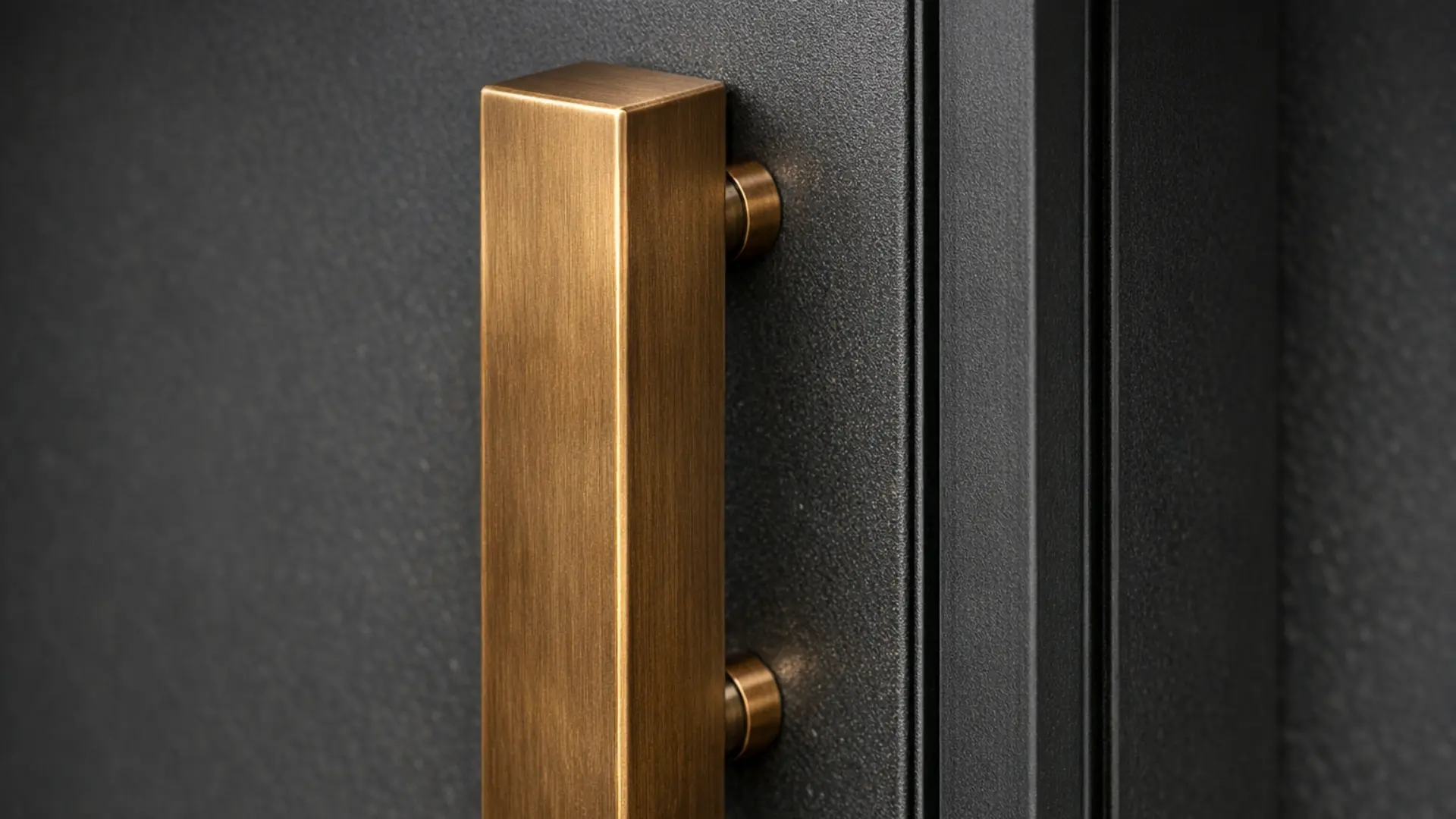
What Current Renovation Data Actually Shows
The 2026 Cost vs. Value Report from Zonda identified steel entry-door replacement as one of the strongest-performing renovation categories in the United States. The report estimated an average project cost of 2,435∗∗,avalueatsaleof∗∗2,435**, a value at sale of **5,270, and 216.4% of cost recouped.
That percentage requires careful interpretation. “Cost recouped” compares the estimated value added at sale with the project cost. It is not the same as guaranteed profit, and it does not mean that every property will sell for exactly $2.16 more for each dollar spent.
The 2025 Remodeling Impact Report from the National Association of REALTORS® offers a more conservative benchmark:
| Renovation category | Estimated cost recovered |
|---|---|
| New steel front door | 100% |
| New fiberglass front door | 80% |
| New front door—owner satisfaction | 8.8/10 Joy Score |
The two reports use different methodologies, respondents, cost assumptions, and valuation models, so their results should not be treated as contradictory or directly interchangeable. Together, however, they indicate that front-door replacement can be a financially credible exterior renovation.
There is an important limitation: these studies are based primarily on standardized residential projects and ordinary material allowances. They do not establish a 100–216% return for a fully bespoke luxury entrance. A custom pivot door may deliver substantial architectural and functional value, but its financial performance depends on whether its specification is proportionate to the property.
How a Luxury Front Door Supports Property Value
1. It Strengthens the Property’s First Impression
The entrance is one of the few architectural elements that buyers examine from a distance, approach directly, touch, and operate. Its proportions, alignment, surface quality, sound, weight, and hardware all contribute to the buyer’s initial assessment of the residence.
A carefully designed entrance can communicate that:
- The property has been maintained consistently.
- Materials were selected deliberately rather than substituted late.
- Construction details received professional attention.
- Security and building-envelope performance were considered.
- The interior is likely to meet the standard established outside.
This effect should not be reduced to “curb appeal” alone. In a high-value residence, the front door acts as evidence of the quality hierarchy applied throughout the property.
Conversely, a lightweight, warped, poorly sealed, or stylistically incompatible door can create doubt before the buyer enters. That doubt may not appear as a separate deduction in an appraisal, but it can influence negotiation leverage and the buyer’s tolerance for the asking price.
2. It Can Remove Functional Objections
The return from a renovation is not created only by adding desirable features. It can also come from removing visible liabilities.
Common entrance-related objections include:
- Difficult or noisy operation
- Air leakage around the frame
- Water penetration at the threshold
- Damaged finishes or corroded hardware
- Inadequate locking systems
- Outdated access control
- Poor alignment with a renovated façade
- Excessive maintenance requirements
Correcting these issues makes the property feel complete. This is particularly important when the kitchen, bathrooms, lighting, and landscaping have already been upgraded. A neglected entrance can undermine an otherwise coherent renovation.
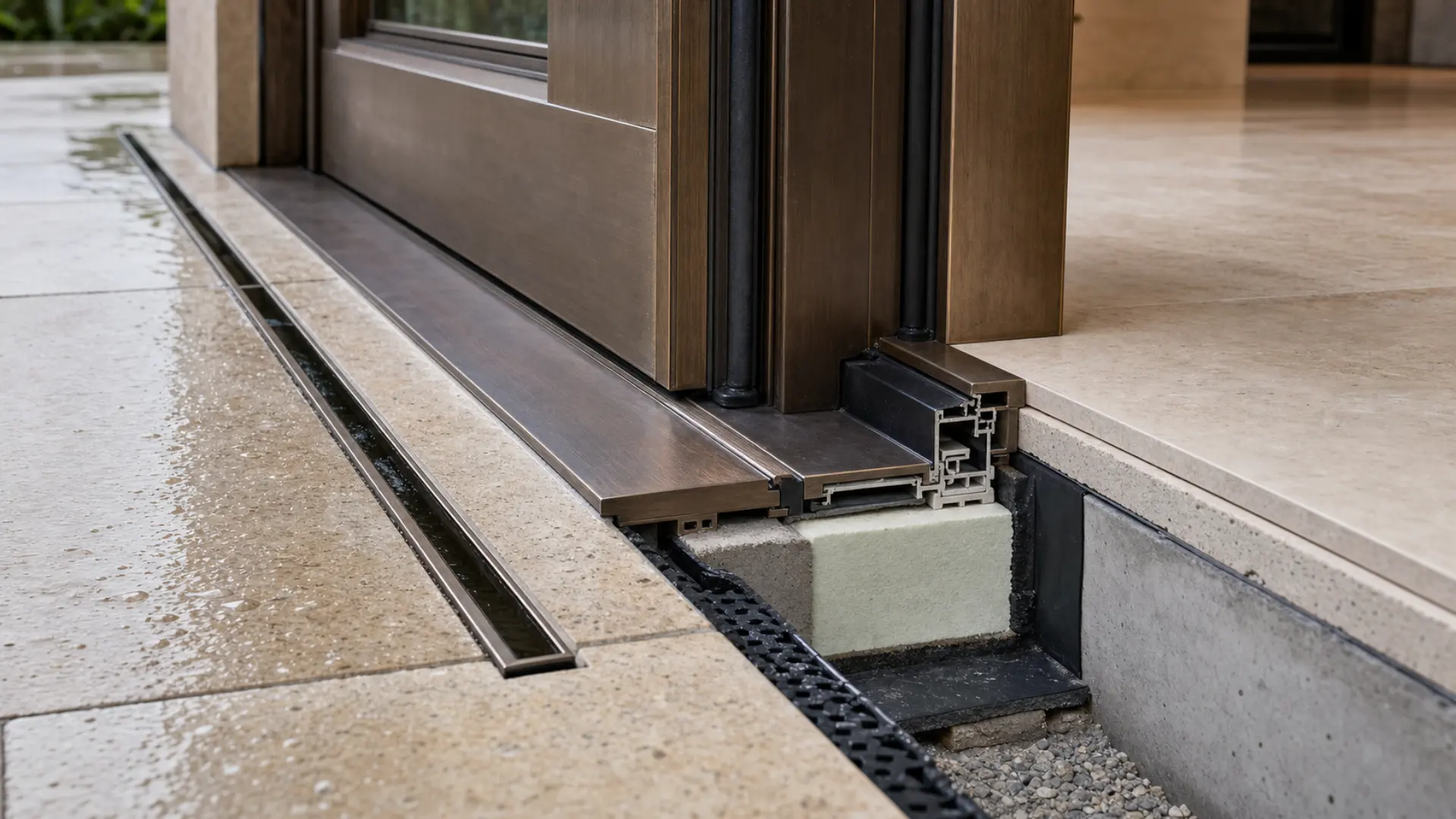
3. Security Becomes Part of the Value Proposition
A luxury front door should be evaluated as a complete doorset: leaf, frame, lock, cylinder, hinges or pivot hardware, glazing, threshold, and anchoring system.
For projects requiring documented burglary resistance, classifications such as EN 1627 RC3 or RC4 may be relevant. The appropriate class depends on the property, location, wall construction, adjacent glazing, and broader security strategy. A reinforced leaf alone does not make an entrance secure if the frame or installation remains vulnerable.
Integrated security features may include:
- Multipoint locking
- Protected cylinders
- Reinforced frames and anchoring
- Laminated or security-rated glazing
- Concealed door-position monitoring
- Biometric or coded access
- Mechanical override for power failure
These features do not create a universal price premium. They do, however, support buyer confidence in markets where privacy, controlled access, and personal security are central purchasing considerations.
4. Better Envelope Performance Reduces Ownership Friction
A front door is part of the building envelope. If it performs poorly, it can contribute to drafts, unwanted heat transfer, water ingress, exterior noise, and condensation around glazed sections.
For products evaluated in North America, the NFRC U-factor represents heat transfer through the complete rated assembly—not merely through its glass. A lower U-factor generally indicates lower thermal transmission. For glazed doors and sidelights, the Solar Heat Gain Coefficient (SHGC) should also be considered according to climate, orientation, and shading.
Useful performance documentation may include:
| Performance area | Evidence to request |
|---|---|
| Thermal transfer | Whole-product U-factor |
| Solar performance | SHGC for glazed assemblies |
| Air leakage | Tested leakage rate and pressure |
| Water resistance | Test pressure and specimen configuration |
| Wind resistance | Design-pressure or structural test data |
| Acoustic control | Rated value for the complete assembly |
| Corrosion resistance | Finish and hardware suitability for exposure |
Energy savings from one door alone should not be exaggerated, especially in a large residence. The stronger value argument is improved comfort, fewer envelope defects, better weather protection, and reduced maintenance risk.
When a Luxury Door Produces Poor ROI
Price alone does not create value. A costly entrance can underperform financially when it is over-specified for the property or disconnected from its architecture.
The most common ROI mistakes are:
Choosing Scale Without Usability
A monumental pivot door may photograph well but offer insufficient clear passage, excessive opening resistance, poor wind control, or difficult maintenance. Buyers value drama only when daily operation remains effortless.
Treating Surface Material as the Whole Product
Bronze, stone, porcelain, or timber cladding cannot compensate for an unstable core, weak frame, inadequate seals, or undersized hardware. Long-term value comes from the complete engineered assembly.
Ignoring the Threshold and Drainage
A flush threshold is visually desirable, but incorrect floor levels or absent drainage can produce water ingress. Such a defect can erase the perceived value of the entire entrance.
Installing Technology That Will Age Quickly
Smart access should be serviceable, supported, and equipped with a mechanical override. Proprietary electronics without replacement pathways may become a liability rather than an upgrade.
Overpersonalizing the Design
Highly specific motifs, unusual colors, and complex ornamental features may narrow the future buyer pool. Bespoke does not have to mean eccentric. For resale-oriented projects, restrained material quality usually ages better than trend-dependent decoration.
How to Evaluate the Investment Before Buying
Homeowners should assess a proposed luxury entrance across four forms of return:
- Resale return: Is the upgrade appropriate for comparable properties and buyer expectations in the local market?
- Functional return: Does it resolve security, weather, acoustic, access, or maintenance problems?
- Experiential return: Will the homeowner benefit from better operation, comfort, and daily interaction?
- Architectural return: Does the entrance complete the façade and strengthen the identity of the residence?
Before approving production, request:
- Itemized supply and installation pricing
- Final elevation, plan, and threshold sections
- Total door-leaf weight and hardware capacity
- Whole-assembly performance documentation
- Frame-anchoring and waterproofing details
- Physical finish samples
- Access-control and power-failure strategy
- Installation, commissioning, and maintenance scope
- Separate warranties for finishes, structure, hardware, and electronics
If resale is expected soon, a local real-estate advisor should also review whether the specification aligns with the property’s competitive set. National ROI statistics cannot replace local market analysis.
A Better Definition of Luxury Front Door ROI
The strongest luxury front door ROI does not come from selecting the most expensive surface or the largest possible pivot leaf. It comes from resolving architecture, security, performance, and construction as one coordinated system.
Published reports support the financial credibility of front-door replacement, but their percentages should not be applied mechanically to bespoke work. In the luxury market, value is more property-specific: the entrance must feel appropriate to the residence, operate without friction, withstand its environment, and provide documentation that supports its technical claims.
When these conditions are met, the front door becomes more than a visual upgrade. It can improve buyer confidence, reduce objections, reinforce the expected quality of the property, and help protect its position in a competitive market.
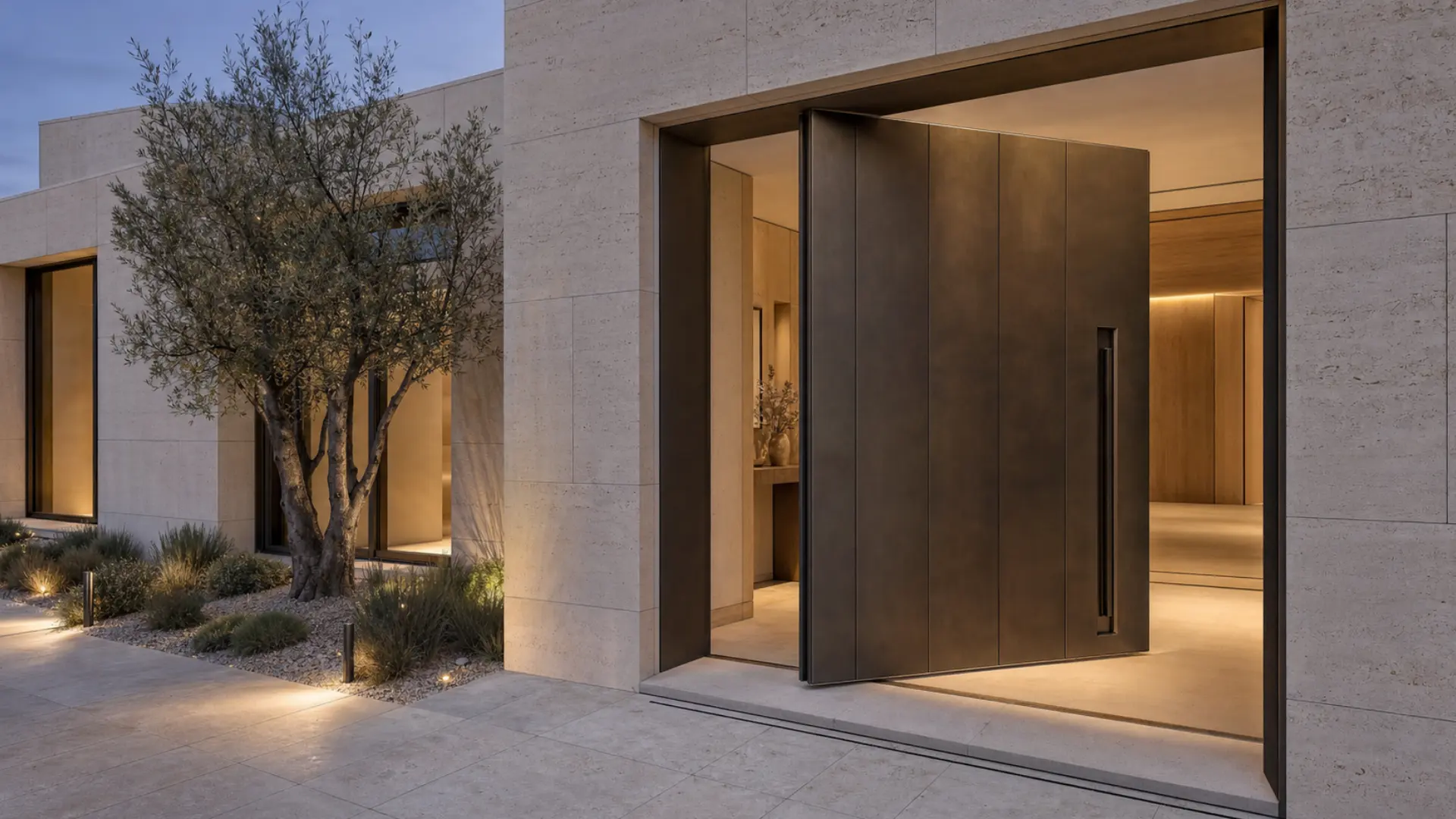
Planning a Front-Door Renovation?
If you are evaluating a custom entrance for a current residence or preparing a property for sale, Minerva Luxury Designs can help assess the appropriate scale, opening mechanism, materials, security level, environmental performance, and installation requirements.
Contact Minerva Luxury Designs to develop an entrance specification aligned with both the architecture of your home and the value expectations of its market.
Frequently Asked Questions
Does a new front door increase home value?
Industry reports indicate that front-door replacement can recover a substantial portion of its cost at resale. Actual results vary according to location, property value, material quality, installation, and architectural compatibility.
Does a luxury front door guarantee a higher sale price?
No. A custom door may strengthen buyer perception and remove functional objections, but no fixed price premium is guaranteed. Published ROI figures for standardized replacement doors should not be applied directly to bespoke luxury systems.
Is a pivot door better for resale?
A pivot door can benefit a contemporary luxury property when its scale and detailing match the architecture. Poor clear-opening dimensions, difficult operation, inadequate sealing, or excessive personalization can reduce that benefit.
Which door features matter most to buyers?
Material quality, effortless operation, secure locking, weather resistance, clean installation, architectural compatibility, and maintainable access technology generally matter more than decorative complexity.
