


Custom door hardware is often the most touched and least underestimated element in luxury door design. Before a guest notices the core construction, the security layers, or the precision of the frame, they experience the handle. They reach for the pull bar. They feel the temperature of bronze, the texture of knurled metal, the weight of a handcrafted grip. In that single interaction, the door communicates quality, intention, and permanence.
For interior designers and detail-oriented clients, hardware is not an accessory added at the end of the project. It is the jewelry of the door: the finishing element that defines character, scale, and tactile identity. In the best projects, custom door hardware does more than complement the architecture. It sharpens it.
1. Why Hardware Carries More Visual Weight Than Its Size Suggests
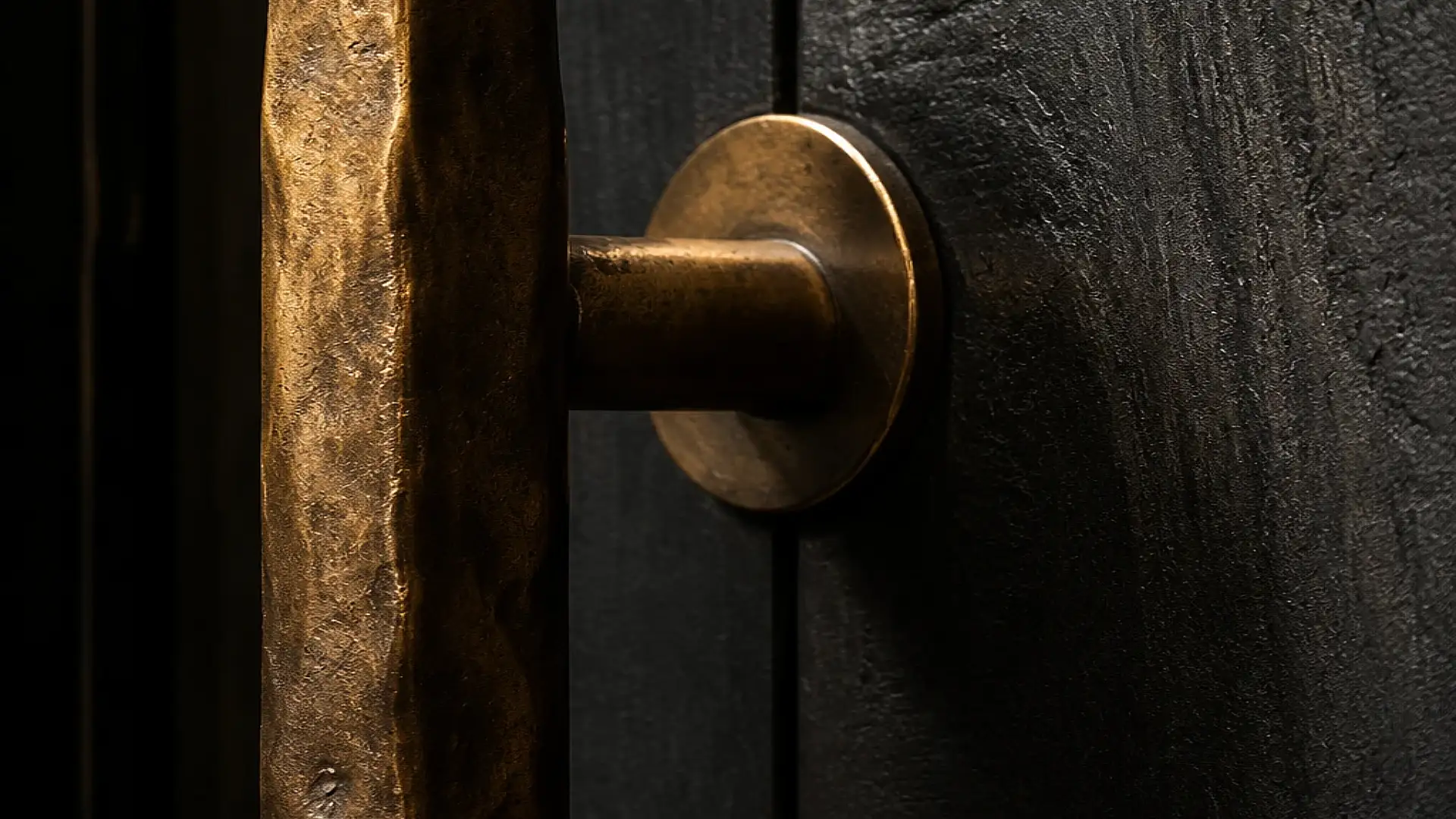
A large entry door may be clad in walnut, bronze, marble, or porcelain, but the hardware is often the point that draws the eye first. This is because the human hand instinctively reads a handle as both a functional object and a design statement. Even on a minimal facade, a pull bar can introduce rhythm, contrast, or sculptural emphasis.
That is why custom door hardware should be considered early in the design process, not selected at the last minute from a catalog. The dimensions of the pull, its projection from the surface, its finish, and its alignment with the door proportions all influence how refined the final result feels. A poorly scaled handle can make an exceptional door look generic. A well-designed one can make the entire entry feel bespoke.
2. The Pull Bar as Architecture, Not Ornament
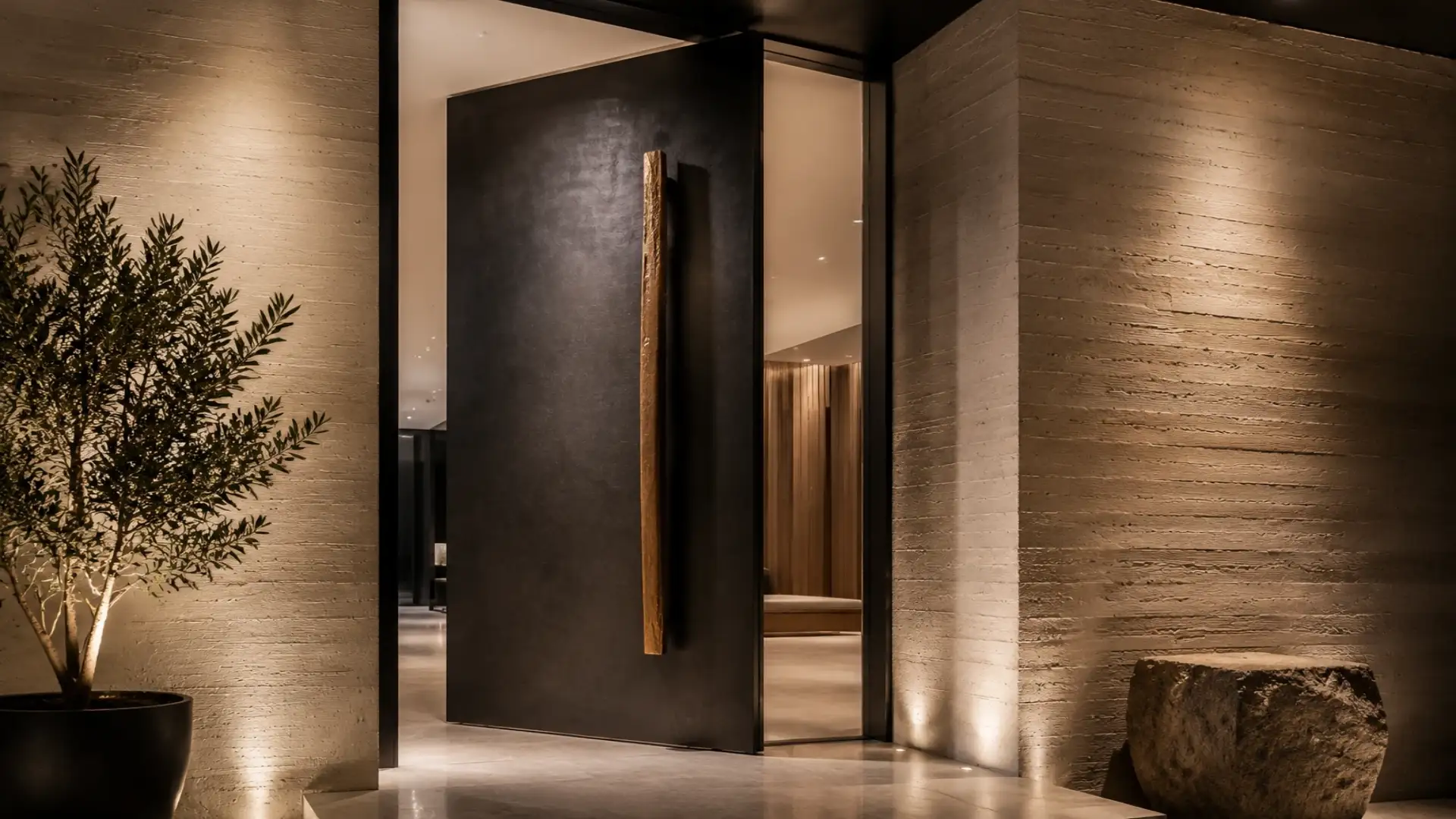
In contemporary luxury projects, the pull bar has evolved beyond simple utility. It now functions as a vertical architectural line, a sculptural gesture, and a tool for balancing the proportions of oversized doors. On pivot systems especially, a full-height or extended pull bar can reinforce the monumentality of the door while making operation feel intuitive.
This is where custom door hardware becomes deeply architectural. Designers may specify:
- extra-long pull bars for tall pivot doors
- offset handles for asymmetrical compositions
- recessed grips for minimalist flush entries
- back-to-back pull systems for large glass or metal-clad doors
The best pull bars do not compete with the door surface. They either create deliberate contrast or integrate so precisely that they feel inseparable from the design language of the entry.
3. Handcrafted Hardware and the Value of Tactile Luxury
Luxury is not only visual. It is tactile. A handcrafted bronze handle with subtle hammering, a leather-wrapped pull, or a precision-machined brass bar with fine knurling creates a sensory experience that mass-produced hardware cannot easily replicate.
For detail-oriented clients, this matters. Custom door hardware allows the designer to control not only the look of the piece, but also how it feels in the hand. Weight, edge softness, surface temperature, grip texture, and even acoustic response all contribute to perceived quality.
This is particularly important in high-end residences where every element is expected to feel considered. A door handle should not feel hollow, sharp, or visually disconnected from the surrounding materials. It should feel substantial, balanced, and crafted with intent.
4. Material Choices: Brass, Bronze, Stainless Steel, and Beyond
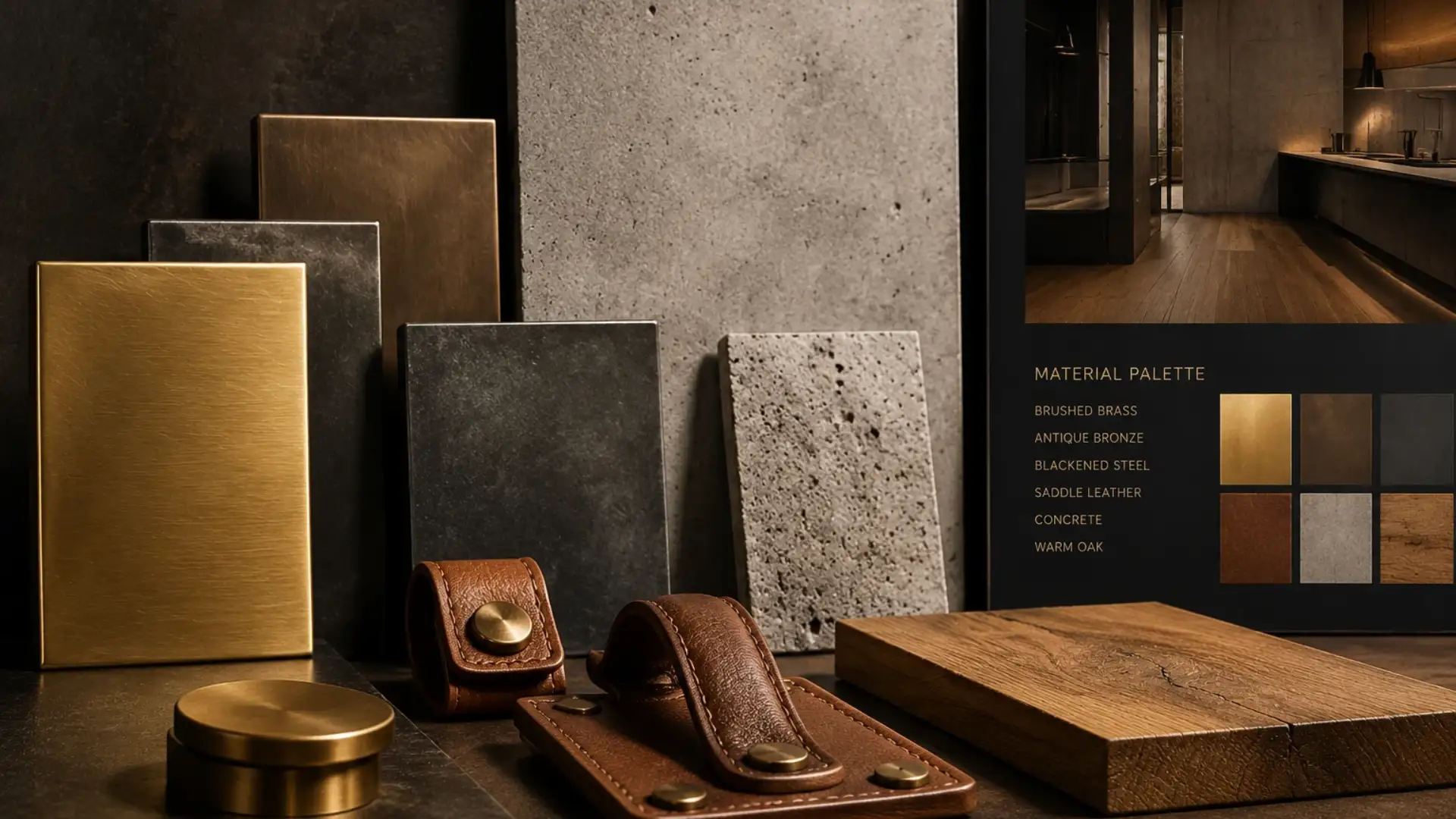
Different hardware materials create very different emotional effects. The right choice depends on the broader architectural palette and on how much aging or patina the client is willing to embrace.
Common options include:
- Brass: warm, luminous, and highly adaptable; can be polished, satin, brushed, or antiqued
- Bronze: richer and darker than brass, with a sense of gravity and timelessness
- Stainless Steel: crisp, modern, and ideal for restrained contemporary environments
- Blackened Steel: dramatic and architectural, often used in minimalist or industrial-inspired homes
- Leather-Wrapped or Mixed Materials: ideal for highly customized interiors seeking softness and individuality
In the world of custom door hardware, mixed materials are increasingly popular because they allow hardware to echo finishes elsewhere in the residence, from staircase rails and cabinet pulls to lighting fixtures and bathroom details.
5. Precision Engineering Behind Beautiful Hardware
A pull bar may look simple, but truly premium hardware depends on technical discipline. Oversized handles must be securely anchored to support repeated use without loosening or stressing the door skin. On heavy entry systems, the mounting method must account for door thickness, substrate reinforcement, and the interaction between decorative cladding and structural core.
This is one of the most overlooked aspects of custom door hardware. Beauty alone is not enough. If the hardware is not engineered properly, it may rattle, flex, corrode, or create thermal issues on exposed exterior doors.
Important technical considerations include:
- concealed reinforcement behind stone, wood, or metal cladding
- corrosion-resistant fixings for coastal or humid climates
- ergonomic grip diameters for comfortable daily use
- alignment with locking systems, escutcheons, and smart access components
- durable finishes that can withstand oils, weather, and repeated contact
6. Matching Hardware to the Character of the Door
Not every luxury door needs statement hardware. Sometimes the most refined decision is a restrained, almost invisible handle. Other times, a bold handcrafted pull is exactly what gives the entry its identity. The key is coherence.
Choose expressive custom door hardware when:
- the entry is meant to feel sculptural and memorable
- the architecture is minimal and needs one focal detail
- the client values artisanal craftsmanship and material richness
Choose quieter hardware when:
- the cladding itself is highly dramatic, such as book-matched marble or deeply textured bronze
- the design language is extremely minimal
- hidden or integrated detailing is part of the concept
The strongest projects do not treat hardware as separate from the door. They design both together, as one composition.
Conclusion
Custom door hardware is where architecture becomes personal. It is the handshake of the home, the detail that transforms a door from a barrier into an experience. For interior designers and detail-oriented clients, pull bars and handcrafted hardware offer one of the most effective ways to elevate an entry without changing its core structure.
When selected with the same care as stone, wood, or metal finishes, hardware becomes more than function. It becomes identity, craftsmanship, and tactile luxury in its purest form.
For related inspiration, explore our articles on Industrial Elegance Custom Doors and Solid Wood vs Engineered Cladding.
