


Invisible protection—high-security armored windows for panoramic views—has become an essential design challenge in modern luxury residences. Architects increasingly favor expansive glass walls and panoramic windows to maximize natural light, landscape integration, and architectural openness. For VIP homeowners, diplomats, and security‑conscious high‑net‑worth individuals, however, these dramatic glass surfaces can appear to introduce vulnerability.
Advances in ballistic glass engineering, structural glazing systems, and laminated security technologies now make it possible to enjoy floor‑to‑ceiling views without compromising security. Today’s armored window systems combine transparency, strength, and discretion, allowing luxury homes to remain visually open while structurally protected.
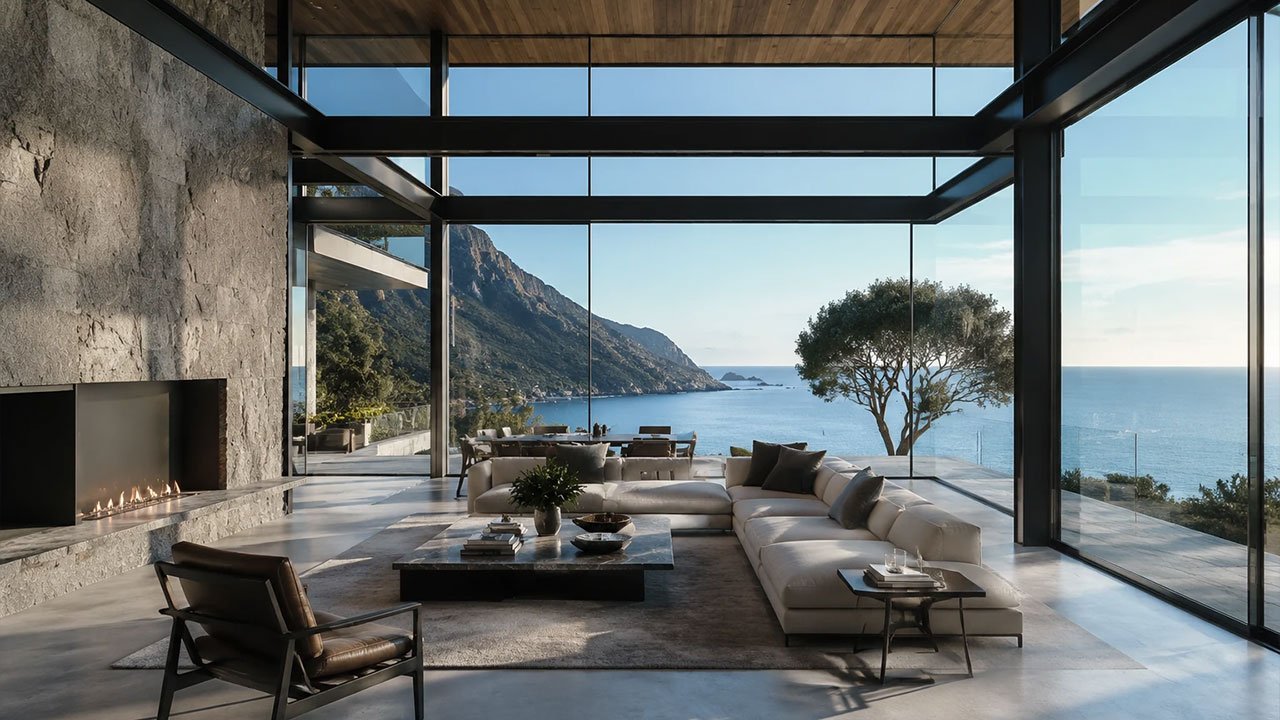
1. The Security Challenge of Large Glass Surfaces
Modern luxury architecture often features:
- Floor‑to‑ceiling glazing
- Panoramic living room windows
- Glass façades facing gardens or ocean views
- Fully glazed sliding walls
While visually stunning, these elements can become potential entry points or ballistic vulnerabilities if not engineered with proper security systems.
For high‑profile residents, glazing must be designed to resist:
- Forced entry attempts
- Impact attacks with heavy tools
- Ballistic threats
- Structural breakage during violent intrusion attempts
High‑security armored windows address these risks without compromising architectural clarity.
2. What Makes a Window “Armored”?
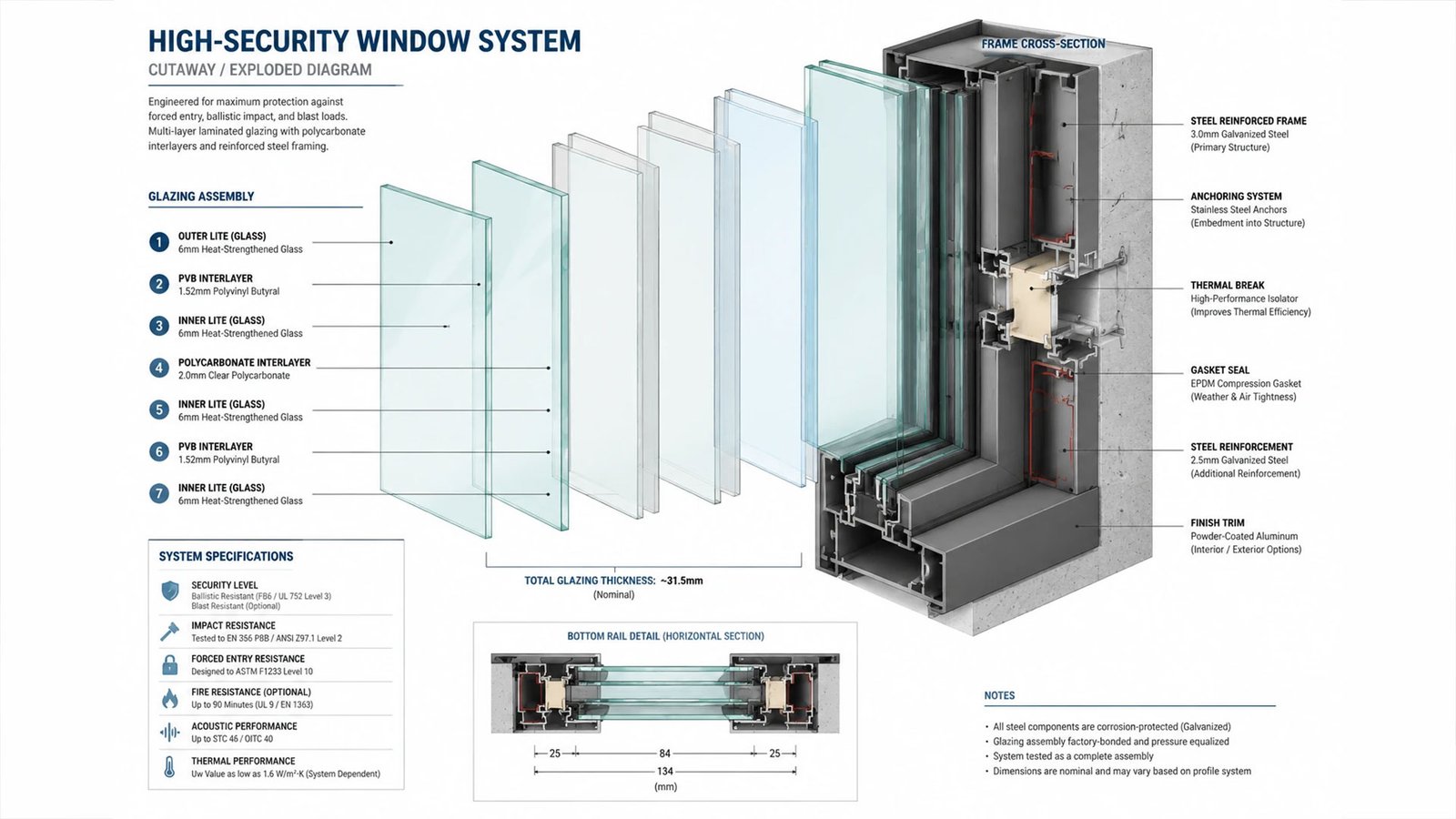
An armored window is not simply thicker glass. It is a multi-layer security system composed of specialized materials engineered to absorb and dissipate energy.
Typical armored glazing structures include:
- Multiple laminated glass layers
- Polycarbonate or composite interlayers
- Energy‑absorbing polymer films
- Reinforced framing systems
These layers work together to prevent penetration and maintain structural integrity even after repeated impact or ballistic stress.
Unlike conventional glass, armored glazing remains largely intact even when damaged, preventing immediate entry.
3. Ballistic Glass: Transparent Protection
Ballistic glass—often called bullet‑resistant glass—is commonly used in diplomatic buildings, armored vehicles, and high‑security residential installations.
Depending on certification levels such as UL 752 or EN ballistic standards, these glazing systems can resist various calibers of ammunition.
Key characteristics include:
- Multi-layer laminated glass and polycarbonate construction
- High optical clarity
- Impact resistance far beyond standard tempered glass
- Controlled energy dispersion to prevent penetration
Despite their strength, modern ballistic glazing systems can remain visually indistinguishable from conventional architectural glass.
4. Reinforced Frames: The Hidden Structural Backbone
Even the strongest glass will fail if the frame system is weak. High-security armored windows rely heavily on structural framing systems designed to withstand extreme loads.
These frames typically include:
- Reinforced steel or aluminum structural profiles
- Deep anchoring into concrete or structural walls
- Anti-pry installation techniques
- Reinforced glazing beads and concealed fasteners
The goal is to ensure the entire window assembly functions as a unified defensive structure, not just a strong piece of glass.
5. Maintaining Panoramic Transparency
One of the greatest engineering achievements in modern security glazing is the ability to maintain visual transparency despite heavy reinforcement.
Advanced manufacturing allows large glass panels to maintain:
- Minimal optical distortion
- Ultra‑clear visibility
- Low iron content for high transparency
- Thin visual profiles despite thick internal structures
This allows architects to preserve the dramatic visual openness of panoramic windows while integrating advanced security.
6. Forced Entry Resistance and RC Ratings
In addition to ballistic protection, high‑security windows are often designed to meet burglary resistance classifications such as RC3 or RC4 under EN 1627 standards.
These systems resist attacks using tools such as:
- Crowbars and pry tools
- Hammers and striking tools
- Portable power drills
- Cutting tools used in forced entry attempts
The laminated glass layers prevent the window from shattering into an open entry point, forcing attackers to spend significant time attempting penetration.
In high-security design, time delay is the most valuable defense.
7. Integrating Armored Windows Into Luxury Architecture
Security glazing does not need to compromise architectural aesthetics. Modern armored windows can be integrated into:
- Minimalist aluminum frame systems
- Structural glass façades
- Sliding panoramic glass walls
- Corner glass installations
- Floor‑to‑ceiling residential glazing systems
When properly designed, the security features remain virtually invisible to occupants and visitors.
This approach aligns perfectly with luxury design philosophy: security that protects quietly without visual intrusion.
8. Additional Protective Features for High-Risk Residences
For VIP residences or diplomatic properties, armored window systems may also include:
- Blast-resistant glazing layers
- Solar control coatings for thermal efficiency
- Acoustic insulation for privacy
- Smart glass technology for instant opacity
- Integrated alarm sensors within frames
These features allow armored windows to function as part of a comprehensive residential security ecosystem.
9. Where Armored Windows Are Most Important
High-security glazing is especially valuable in areas such as:
- Ground-floor living rooms facing gardens or streets
- Oceanfront or mountain-view glass façades
- Home offices handling sensitive work
- Private bedroom suites
- Residences located in highly visible or public locations
These spaces benefit from enhanced protection while maintaining the openness that defines luxury architecture.
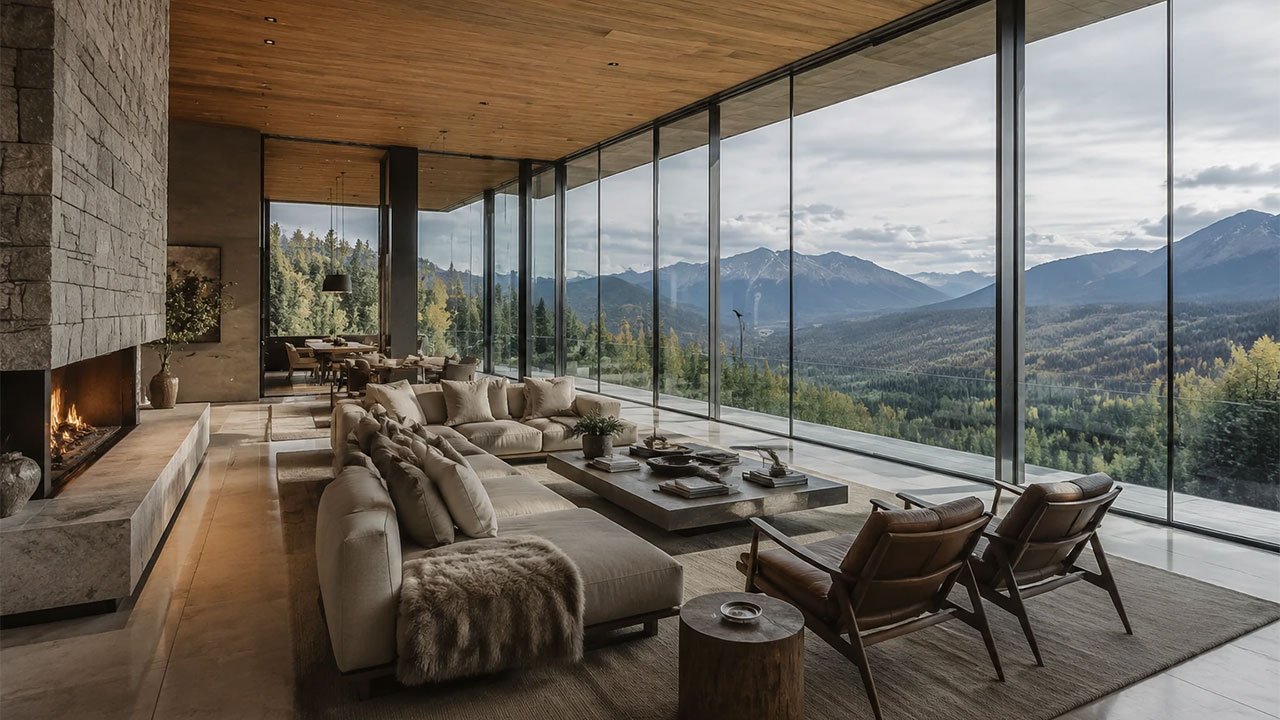
Final Thoughts: Security Without Sacrificing the View
For luxury homeowners, panoramic windows represent openness, light, and connection to the surrounding environment. With modern armored glazing technology, these expansive views no longer need to come at the cost of security.
High-security armored windows offer invisible protection, combining ballistic resistance, forced‑entry protection, and structural resilience within glass systems that remain elegant and unobtrusive.
For VIPs, diplomats, and security‑conscious homeowners, this technology enables a powerful design principle: a home that feels open and free—yet remains quietly protected at every transparent boundary.
